
The Ceyhan oil pipeline is revived… Baghdad and Erbil overcome the “oil impasse” with a political settlement under the pressure of crises.
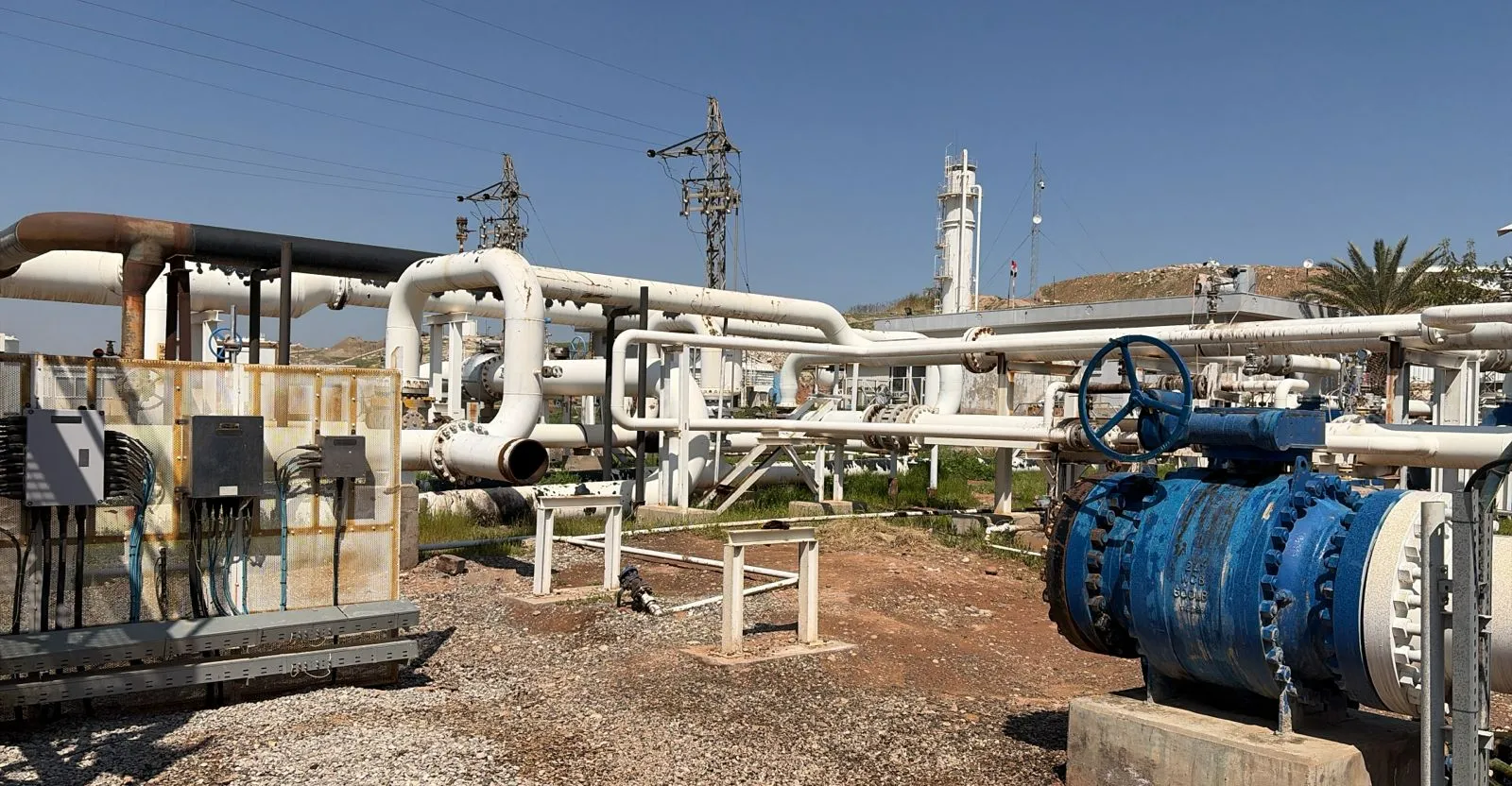 The recent agreement between Baghdad and Erbil to resume oil exports through the Ceyhan port constitutes a political settlement imposed by complex internal and regional circumstances, and does not represent a final solution to the outstanding disputes and issues between the two sides.
In this regard, Kirkuk Provincial Council member Ahmed Fateh Mustafa stressed that the recent agreement between Baghdad and Erbil to resume oil exports through the Ceyhan port cannot be considered merely a technical agreement, but rather represents a political settlement imposed by complex internal and regional circumstances.
Mustafa said in a statement received by Shafaq News Agency that “the agreement, despite its importance, does not constitute a radical solution to the existing disputes regarding the management of oil wealth, but rather is an attempt to contain the crisis, while the fundamental issues related to powers and the distribution of revenues continue without a final resolution.”
He added that “Baghdad strengthened its position by establishing the principle of centralized revenues, while Erbil demonstrated a degree of realism and responsibility by accepting the agreement, in order to preserve economic stability and enhance national partnership,” noting that “the regional factor, especially the Turkish role, contributed to advancing this path.”
The provincial council member added that “from an economic standpoint, the agreement provides additional revenues for Iraq and reactivates the Kirkuk-Ceyhan pipeline, but it remains a limited and unsustainable solution unless the legal and technical issues between the federal government and the Kurdistan Region are resolved definitively.”
Mustafa stressed that “the Kirkuk Provincial Council must pay great attention to the oil file, given its direct connection to the stability of the province and the rights of its people, and its impact on the level of services, job opportunities and social balance.”
He concluded by saying, “The agreement represents an important step, but it is temporary, and its sustainability will remain contingent on the enactment of comprehensive national legislation that definitively regulates the oil and gas sector.”
In the same context, the North Oil Company announced the start of the process of exporting Iraqi oil from Kirkuk Governorate to the Turkish port of Ceyhan, confirming that the initial production will reach 250,000 barrels per day.
The company stated in a statement received by Shafaq News Agency that “Kirkuk fields have recorded a strong return to the forefront of production and export, with the resumption of crude oil pumping operations through the Turkish port of Ceyhan, after a period of cessation that posed a major challenge to the oil sector.”
She added that “this important development is the result of the agreement concluded between the federal government and the Kurdistan Regional Government, which contributed to reactivating one of the most prominent strategic export outlets and enhancing the flexibility of the Iraqi oil export system.”
The company indicated that it had begun operating the Saralo pumping station, “signaling the resumption of pumping and exporting Kirkuk oil to the Ceyhan port, with an initial export capacity of (250,000) barrels per day.”
According to the statement, “This return does not just represent a resumption of export operations, but embodies a technical and administrative success that reflects the scale of the field and engineering efforts made by national cadres to ensure the readiness of the infrastructure and the continuity of operations with high efficiency.”
He explained that “this strategic step confirms the pivotal role of the Kirkuk oil fields in supporting the national economy and enhancing the stability of the oil market.”
The Kurdistan Regional Government announced on Tuesday evening that it had reached an agreement with the federal government to export oil from the Kirkuk and regional oil fields together via the Kurdistan Region-Ceyhan pipeline, starting today, to global markets.
The Ministry of Natural Resources in the regional government had previously confirmed that there were multiple reasons behind the halt in exports, in response to accusations by the Federal Ministry of Oil regarding obstructing the process.
In contrast, the Iraqi Oil Ministry called for a swift resumption of exports to reduce financial losses, noting that it had proposed exporting about 300,000 barrels per day via pipeline, in addition to oil from the region’s fields.
This comes at a time when Iraqi oil exports have declined in the past period, amid escalating regional tensions, which has increased the importance of reactivating the northern export lines to enhance stability in the oil market.
Shafaq.com