
Iraqi oil announces export alternatives and confirms Kirkuk pipeline will be ready within a week
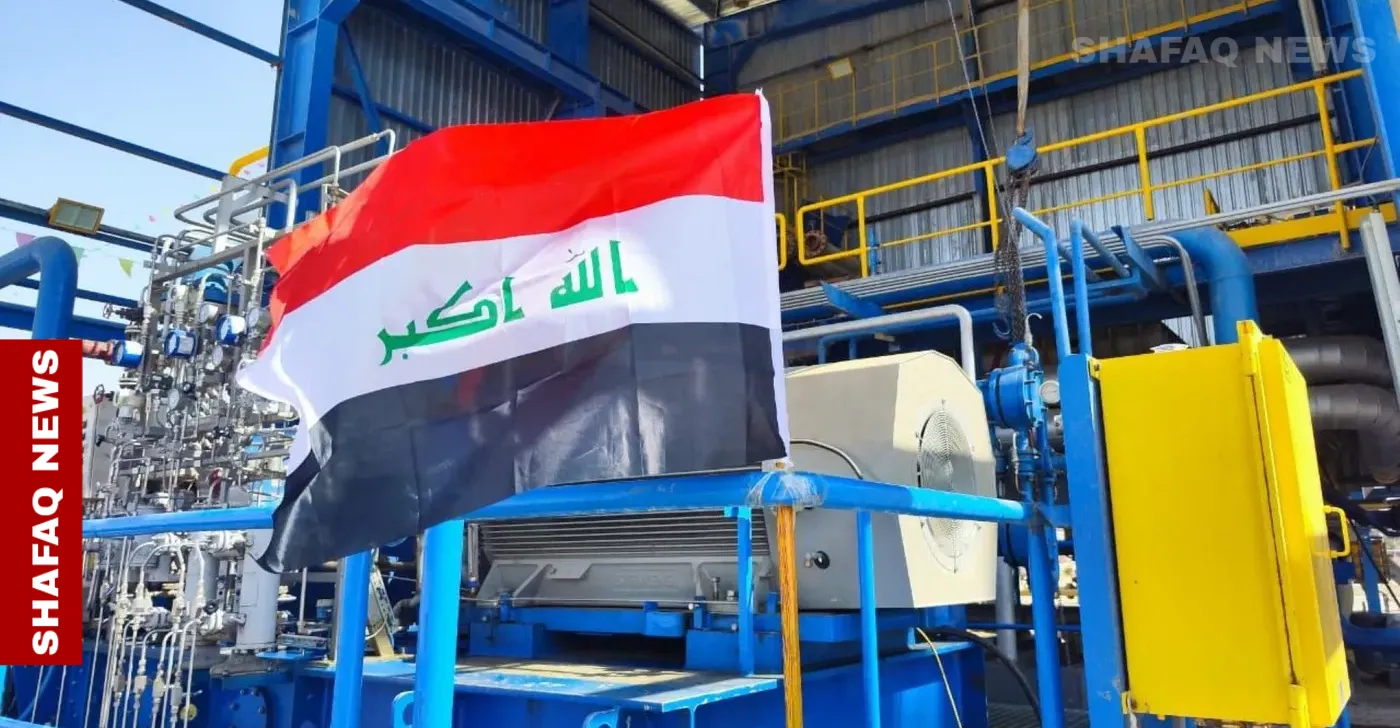 Iraqi Deputy Prime Minister for Energy Affairs and Oil Minister Hayyan Abdul-Ghani Al-Sawad revealed on Monday alternative plans for exporting oil in light of the halt in exports through the Strait of Hormuz, stressing that the “Kirkuk-Turkey” pipeline will be ready to operate within a week “without passing through the Kurdistan Region.”
Al-Sawad said in a statement via video clip, which was received by Shafaq News Agency, that Iraq’s crude oil production amounts to about 4.4 million barrels per day according to the quota set by the “OPEC” organization, noting that the military operations in the Gulf and the closure of the Strait of Hormuz led to the cessation of Iraqi oil exports days after the outbreak of war in the region.
He added that Iraq used to export about 3.4 million barrels per day through the southern ports, most notably the Basra oil port, but the closure of the strait prompted the Ministry of Oil to reduce production from the oil fields, with current production reaching between 1.5 and 1.6 million barrels per day to cover the needs of refineries and power plants.
He explained that the refineries are currently operating at their maximum design capacity to provide white petroleum products, including gasoline, diesel and kerosene, in addition to liquefied gas “LPG”, which covers local demand, while keeping a portion of it as an emergency reserve.
The minister pointed out that the daily consumption of cooking gas is about 6,000 tons, while the South Gas Company, in cooperation with Shell, produces about an additional 4,000 tons, in addition to investing in associated gas from several fields to produce about 600 million cubic feet per day of dry gas and quantities of cooking gas.
He added that Iraqi refineries also produce between 1,400 and 1,500 tons per day of liquefied gas, as well as 400 to 500 tons of northern gas, with a strategic reserve of more than 50,000 tons underground available for use when necessary.
Al-Sawad confirmed that oil and gas products currently cover local needs, despite the halt in exports and the impact on oil revenues, noting that there are efforts to start exporting quantities of oil through the Turkish port of Ceyhan, in addition to tenders to export oil through the port of Banias in Syria and the Aqaba pipeline.
He explained that the Iraqi-Turkish pipeline for transporting Kirkuk oil, with a capacity of 200,000 to 250,000 barrels per day, is currently undergoing final inspection and qualification, and only about 100 kilometers remain to be tested hydrostatically within a week, which will allow oil to be pumped directly from the Kirkuk fields to the pipeline without passing through the Kurdistan Region.
He also noted the suspension of production in a number of oil fields, including West Qurna 1 and 2, Al-Faiha and Al-Majnoon, in addition to some fields in Maysan such as Al-Halfaya and Al-Buzurgan, while production continues in the central fields to provide gas to power stations despite its low rates.
He confirmed that the Kirkuk oil fields are currently operating at their maximum capacity to secure the oil needed for the northern refineries, explaining that the Ministry of Oil was able during the past two months to rehabilitate some of the pumps at the strategic station, allowing for the pumping of about 250,000 barrels per day of Basra oil to the northern refineries, with a similar quantity of Kirkuk oil to be exported via the Iraqi-Turkish pipeline after the final inspection is completed within a week.
Shafaq.com