
Reuters: Iran’s strikes pave the way for a Gulf-US alliance against it
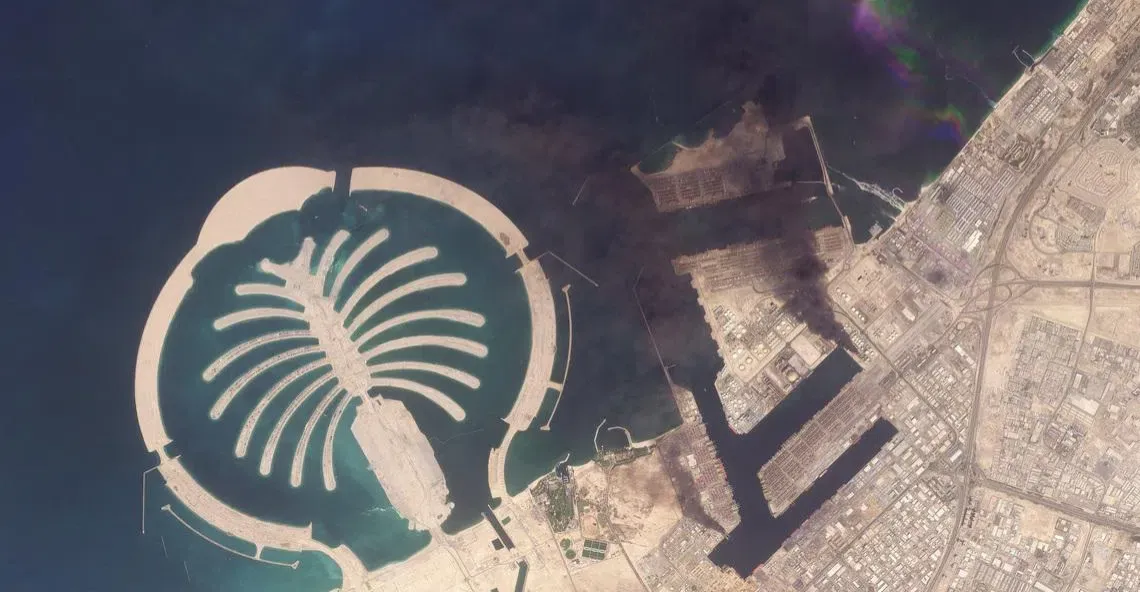 Reuters reported on Tuesday that Iranian airstrikes on Gulf states could push them to join a broad US-led coalition, potentially widening the scope of the war against Iran, following attacks targeting ports, cities and oil facilities in a vital energy-producing region, according to Middle East analysts.
The agency’s report indicated that Tehran may be pushing the hesitant Gulf states to move closer to Washington – by targeting the Gulf’s economic arteries in response to US and Israeli airstrikes against Iran – and toward taking coordinated action against the Islamic Republic, according to analysts.
They added that the aim of the strikes, which targeted six Gulf states, all of which are US allies and host US military bases, was to ensure that those countries would put pressure on US President Donald Trump to stop the war, but Iran appears to have miscalculated.
The report quoted Abdulaziz Sager, head of the Saudi-based Gulf Research Center, as saying that “Gulf states now face difficult and clear choices: either to join the United States more openly in its war effort — by allowing the use of their airspace and territory and possibly participating in military operations — or to risk further escalation on their own soil.”
He added that the option of neutrality declined when Iranian missiles began to fall, which “forced us to be their enemies,” prompting countries that had previously adopted a cautious and balanced stance to openly align themselves with Washington and prepare to defend their territories and interests.
The Gulf Cooperation Council — Saudi Arabia, the United Arab Emirates, Qatar, Bahrain, Kuwait and Oman — held an emergency ministerial meeting on Sunday, invoking Article 51 of the UN Charter, setting “red lines” and indicating readiness for collective self-defense as energy disruptions and security risks escalate.
The message from the Gulf Cooperation Council to Tehran was clear and unequivocal: Iran’s attacks have contributed to strengthening the unity of the Gulf states.
He also noted that continued strikes could turn the Gulf from a defensive shield into an “active response arena,” and that Gulf states have activated joint air defense systems and reconnaissance flights across regional airspace.
According to a Reuters report, analysts say the choice is clear and decisive: either to respond and risk a wider war, or to wait and accept the erosion of security, economic stability and international credibility in light of repeated attacks.
Gulf officials confirmed that messages had been conveyed to Tehran, directly and indirectly, warning that any further attacks would have far greater consequences for the Islamic Republic.
A well-informed Gulf source said: “In practice, they will try to wait as long as possible. The Americans are hitting them and the Israelis are hitting them.”
He added that it was unclear who was pulling the strings in Iran — whether the strikes on the oil facilities were ordered centrally or carried out by rogue units.
Two scenarios appear to be taking shape: either the command structure has fractured, with some units acting independently, or decisions are still being coordinated at the highest levels.
The risks are not limited to the Gulf region alone, but extend to oil exports, shipping lanes, energy infrastructure, a vital energy corridor, and repercussions for global trade and markets.
Global energy markets are facing one of the most serious shocks they have seen in decades. Missile threats have forced some Gulf energy facilities to shut down, including Qatar’s liquefied natural gas plants – which account for about 20% of global supplies – and have revealed the impact this has had on energy markets.
The report quoted the head of the Emirates Policy Center, Ebtisam Al-Ketbi, as saying: “If the strikes continue at this rate, and the Gulf cannot withstand a prolonged conflict, or the disruption of oil shipping lanes, or the closure of the Strait of Hormuz, it will be natural for other countries to intervene, because global interests will be directly affected.”
Mohammed Bahroun, director general of the Dubai Center for Public Policy Research, said the logic of expanding the alliance against Iran has been strengthened after the United Arab Emirates described the Iranian strikes as acts of terrorism.
He added that “Iran is pushing the Gulf states towards an expanding alliance against it. By attacking the Gulf states, Iran is turning them into enemies and exposing them to the risk of a wider war that no one wants.”
The attacks on sites linked to the West – from a British base in Cyprus to facilities hosting French forces in Abu Dhabi – have also raised the possibility of NATO being drawn into the conflict eventually.
The United Arab Emirates bore the brunt of the Iranian attack, with 63% of the strikes targeting its airports, ports, and oil infrastructure. Officials estimate that 165 ballistic and cruise missiles, along with 600 drones, were launched in the first 48 hours.
The missiles that struck Doha, Dubai and Manama over the weekend also targeted the image of the Gulf states as thriving centers of finance, investment and tourism, damaging their reputation as safe and stable havens.
The missile attacks that struck Doha, Dubai, and Manama over the weekend targeted the image of the Gulf states as thriving centers of finance, investment, and tourism, damaging their reputation as safe and stable havens. Despite the United Arab Emirates’ determination to avoid a full-blown war, it quickly took diplomatic action, summoning the Iranian ambassador, withdrawing its own envoy, closing its embassy in Tehran, and pressing the UN Security Council to address the issue.
Reuters noted that Gulf officials say Iran has radically changed the diplomatic landscape by launching ballistic missiles and drones on such a wide scale.
They add that Tehran’s actions have made it more difficult for future negotiations with the United States to deal with Iran’s missile program separately from its nuclear ambitions, a position, they say, now adopted by its Sunni Arab neighbors in the Gulf and Western governments.
Shafaq.com