
Liquidity crisis in Mosul banks delays the release of payments to outlet owners
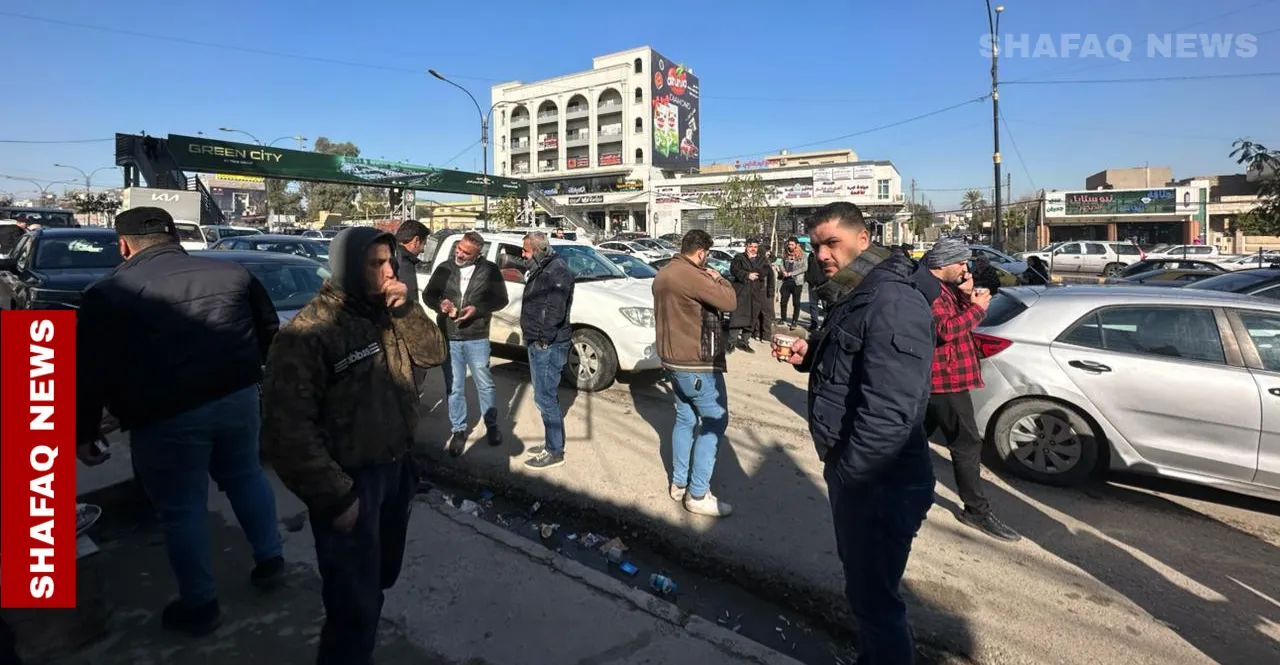 On Monday, Abdullah Al-Jiro, the head of the money changers’ union in Nineveh Governorate, revealed a cash liquidity crisis affecting banks in Mosul, which has delayed payments to money changers, prompting some of them to spend the night in front of banks hoping to receive their money.
Al-Jiro told Shafaq News Agency that “banks operating in Mosul are experiencing a clear shortage of cash liquidity, which has directly affected the non-disbursement of dues to the owners of outlets,” explaining that “this crisis is due to the financial deficit that the government announced earlier.”
He added that “a number of outlet owners now spend their nights in front of banks waiting for them to open in the morning, while others are forced to go to other governorates to collect their dues, which burdens them and disrupts their work.”
According to Al-Jiro, “the continuation of this crisis will negatively affect the local economic situation and lead to a loss of confidence between citizens on the one hand, and Key Card Company and government institutions on the other,” calling on the concerned authorities to “find urgent solutions to address the liquidity shortage and restore confidence in the financial system.”
Since the beginning of last month, Iraqi banks have entered a sensitive phase with a decline in available liquidity, amid rising financial obligations and weak cash flow, while parliamentary and economic bodies warn of a widening gap between government spending and oil revenues, which puts the country in a difficult financial situation that directly affects the lives of citizens.
These warnings come at a time when observers fear an alarming increase in the financial challenges facing the Iraqi economy, in light of the announcement that internal debt has risen to about 90 trillion Iraqi dinars (about $69 billion), an unprecedented level in the country.
Shafaq.com