
Sudani directs a comprehensive evaluation and restructuring of tax administration systems in Iraq
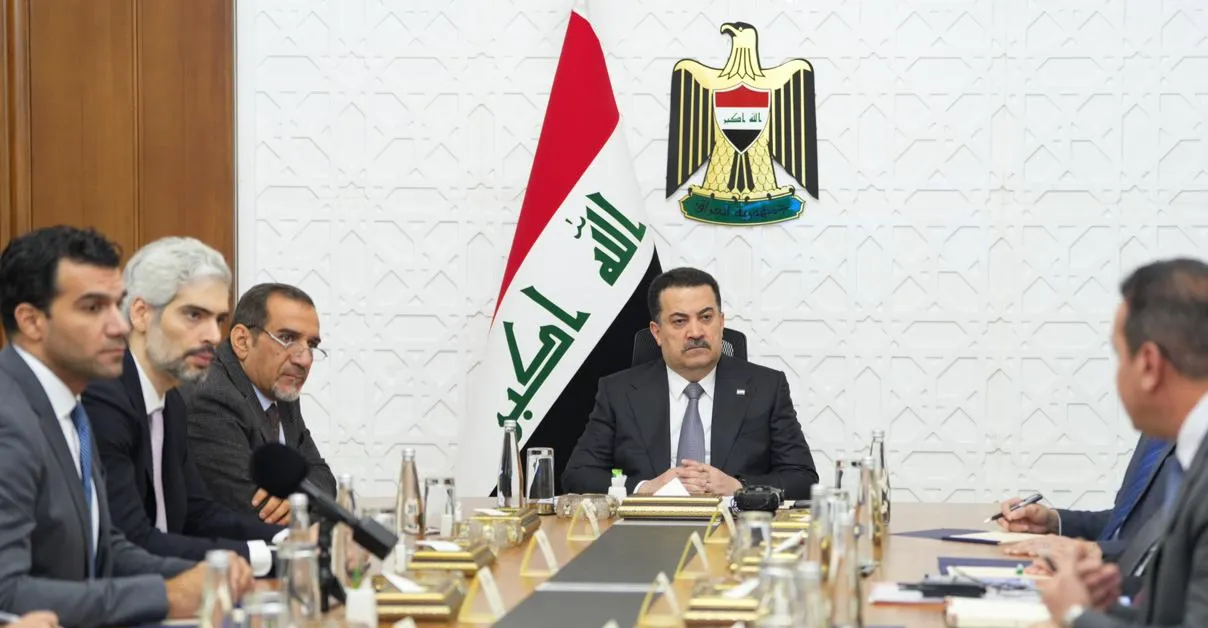 On Thursday, outgoing Prime Minister Mohammed Shia al-Sudani directed that a comprehensive evaluation and restructuring of all tax administration systems in Iraq, including their specific policies, be carried out.
This came during his chairmanship of a special meeting to follow up on the implementation of the comprehensive tax system governance, in the presence of senior staff of the General Authority for Taxes and relevant institutions, and representatives of the consulting firm “Oliver Wyman”, according to a statement issued by the Sudanese Media Office.
The statement said that the meeting reviewed previous efforts to follow up on the comprehensive development of the tax administration sector through reform steps, most notably attracting specialized international companies to work on the integrated automation of tax departments, and a detailed presentation was given to these companies.
Al-Sudani also directed the Supreme Committee for Tax Reform to study the Oliver Wyman program in planning and implementation and to submit a detailed report on it, as this program included an integrated work methodology for reforming and developing tax administration, as a fundamental and pivotal pillar for increasing sustainable government revenues, in order to reach a tax administration that is characterized by transparency and fairness, and contributes to raising Iraq’s financial and investment ranking.
According to the statement, the meeting reviewed a number of similar experiences in Arab countries, the extent of development that has occurred in their work, and the amount of tax increases achieved during the first year of implementation.
Iraq had the highest income tax rate among Arab countries for the year 2024, according to infoflix.
Recent economic data seen by Shafaq News Agency shows that Mauritania topped the list of Arab countries in terms of the highest income tax rates for 2024 at 40%, followed by Morocco at 38%, then Algeria and Tunisia at 35% each.
Egypt came in fifth place with 26%, followed by Lebanon with 25%, followed by Syria in seventh place with 22%, while Jordan came in eighth place with 20%.
Iraq and Sudan came in last place with 15% each, reflecting a clear disparity in tax policies among Arab countries.
Economic experts believe that the decline in the income tax rate in Iraq is due to ongoing efforts to attract investments and stimulate the private sector, in light of the economic challenges facing the country, especially the heavy reliance on oil revenues.
The tax system in Iraq also continues to face difficulties in implementation and modernization, which affects the state’s ability to maximize non-oil revenues.
At the end of August, Al-Sudani confirmed that Iraq faces a major economic challenge, namely the priority of reform and the transition to a diversified economy, noting that the size of public spending in each fiscal year amounts to about 150 trillion dinars, compared to tax revenues that do not exceed 3 trillion.
In a speech during the tax conference for economic development and revitalizing the investment environment held in Baghdad, Al-Sudani said, “The general budget amounts to about 150 trillion dinars annually, compared to tax revenues that do not exceed 3 trillion, and these figures need to be examined and reviewed.”
He added that “reform decisions in the economic field were previously exploited within the framework of slogans and pressure on official institutions,” noting that “the government sponsored the tax system reform conference in December 2023, which came out with a package of important recommendations.”
He explained that “Cabinet Resolution (24074 of 2024) put the tax reform packages into effect, followed by the formation of the Supreme Committee for Monitoring Tax Reform,” indicating that “the efforts resulted in international interest from investors in tax reform in Iraq.”
Al-Sudani added that “the government worked to increase non-oil resources despite great caution due to the absence of a supportive political and social environment,” noting that “the index rose from 7% in 2022 to 14% in 2024.”
He noted that “tax revenues increased by 26% during 2024 compared to the previous year, and by 3% in the first half of this year compared to the same period last year,” stressing that “digital transformation has contributed to enhancing tax capacity and accuracy.”
Al-Sudani explained that “the tax inquiry platform has eliminated cases of name similarity, delays, corruption, and undermining the taxpayer’s confidence in tax procedures,” adding that “the system for tax payment receipts and their matching has been completed electronically after it was previously paper-based.”
He affirmed that “there is ongoing communication with reputable international companies to work towards achieving the highest international standards in the tax system,” stressing that “the draft of the new income tax law has adopted international standards, while adhering to social justice and tax allowances for those with lower incomes.”
He pointed out that “the new law that will be enacted soon will be business-friendly and supportive of the green economy and emerging projects,” indicating that “the Supreme Committee for Tax Reform has completed the policy paper on tax accounting for oil companies to address the problems and obstacles to their work.”
Al-Sudani added that “unifying tax procedures between the federal government and the Kurdistan Regional Government of Iraq has facilitated the processing of tax files for universities and private banks,” stressing that “the reforms being achieved represent a message to the citizen to support his political system and manage resources in the best possible way.”
He concluded by saying: “We will not allow a tax increase that leads to a business-repelling climate or comes at the expense of fairness in taxation.”
Shafaq.com