
The central bank speaks of “intertwined pressures” on the economy… and expresses concern about the repercussions of “salary spending cuts”.
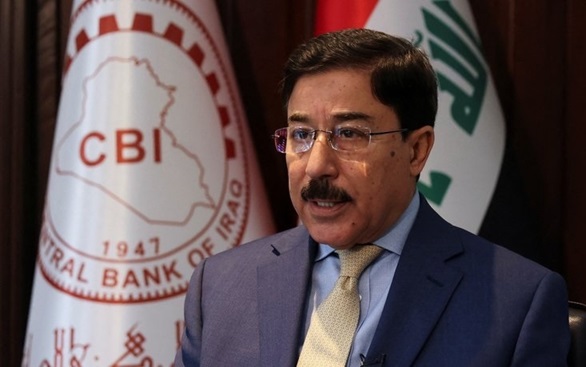 Bank Governor Ali Al-Alaq confirmed that the Iraqi economic scene is facing complex pressures, noting that salaries and subsidies pose an additional challenge, with the difficulty of reducing these expenditures due to the expected social repercussions.
Al-Alaq said on the sidelines of the Fifth Regional Conference of the Islamic Economic Forum in Cairo that “the Iraqi scene is facing complex pressures and accumulated infrastructure and development challenges, which require diversifying the economy and maximizing public revenues,” noting that “public finances in Iraq depend on oil exports by more than 90%, which is an unconventional source subject to fluctuations in global prices, leading to revenue volatility and weak financial stability, which necessitates finding structural solutions.”
He stressed that “the limited economic diversification and weak productive sectors have made Iraq a country that is primarily an importer, which puts continuous pressure on the dollar and the exchange rate, especially with the rise in purchasing power and the increase in daily demand for foreign currency, which is directly reflected in the monetary policy that has achieved great success in balancing the maintenance of price levels, managing liquidity and stimulating the economy.”
He pointed out that “public spending pressures, especially on salaries, subsidies and basic services, pose an additional challenge,” stressing “the difficulty of reducing these expenditures due to the social repercussions they may cause, at a time when the Central Bank is seeking to avoid inflation and maintain monetary stability to protect the social structure in the country,” according to the state-run Al-Sabah newspaper.
Al-Alaq explained that “Iraq has been able in recent years to finance part of the financial deficit through the development of non-oil revenues, while continuing to coordinate with the Prime Minister with the aim of maximizing these resources and reducing dependence on oil in an effort to break the ‘financial dominance’ of oil revenues over the general budget.”
The Central Bank Governor stressed that “the stability of the exchange rate is a pivotal goal, as it provides a safe cover for investors and citizens,” while pointing out that “international studies show that losses in the debt file may range between 20% and 25% as a result of ill-considered financing conditions or delays.”
Burathanews.com