
America is tightening Iraq’s financial grip with the SWIFT system.
America is tightening Iraq’s financial grip with the SWIFT system.
Economic expert, Faleh Al-Zubaidi, confirmed today, Thursday, that the United States of America is using the global financial transfer system “SWIFT” as a tool for political and economic blackmail, exploiting its dominance over the international financial system to impose pressure on countries that do not align with its interests, most notably Iraq.
Al-Zubaidi said in a statement to Al-Maalouma Agency, “The SWIFT system is used for global bank transfers, but it is actually subject to American control, which makes it an effective tool for punishing countries that deviate from the American line.”
He pointed out that “Iraq is now on the list of countries targeted by the policy of hidden financial sanctions, in order to impose American dictates on its government.”
He added that “the severe restrictions Baghdad is suffering from in international financial transactions fall within the policy of economic pressure, and it is a repetition of what happened with Russia, Iran and China.”
Al-Zubaidi warned that “the continued American control over SWIFT poses a direct threat to Iraq’s financial security and economic sovereignty.”
Almaalomah.me
Posted in Uncategorized
Comments Off on America is tightening Iraq’s financial grip with the SWIFT system.
Iraq’s money is in the hands of the Federal Reserve. When will the American shackles be broken?
Iraq’s money is in the hands of the Federal Reserve. When will the American shackles be broken?
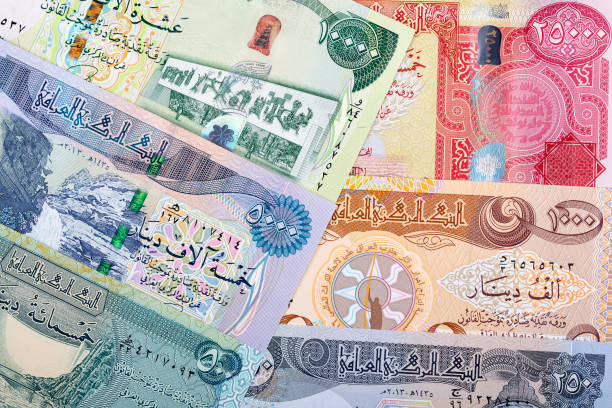 Despite more than a decade having passed since Iraq’s exit from Chapter 7, Iraqi oil revenues remain under the control of the US Federal Reserve, limiting Baghdad’s ability to freely manage its financial resources and directly impacting economic stability and the dinar’s exchange rate.
Long guardianship disrupts the economy
The continued US Federal Reserve’s custody of Iraq’s oil revenues is one of the main factors hampering the economy and deepening the dollar’s appreciation crisis.
Although Iraq fully fulfilled its obligations to Kuwait and moved from Chapter VII to Chapter VI, this problem remained unresolved.
In this context, Abbas al-Jubouri, director of the Al-Rafd Center for Media and Strategic Studies, told Al-Maalouma, “Iraq has exited Chapter 7 after fulfilling its commitments to Kuwait, and is now moving to the less severe Chapter 6. However, the Federal Reserve’s problem has remained unchanged, as it continues to control Iraqi oil revenues.”
Al-Jubouri added that “the lack of unity in the political decision-making process within the country, due to divisions and disagreements, has weakened Iraq’s position on lifting the US Federal Reserve’s mandate, and has kept this problem ongoing with no clear horizon for a solution.”
Parliamentary pressure and proposed solutions
For his part, Member of Parliament Firas Al-Maslamawi called on the government and Ministry of Finance to take strong action to pressure the US Federal Reserve to release more Iraqi funds held there, stressing that Iraq is not a poor country, but its financial resources are constrained.
Al-Maslamawi told Al-Maalouma, “Iraq’s funds are deposited with the US Federal Reserve, and they don’t provide it in proportion to the country’s needs, whether to secure employee salaries or finance projects.” He stressed that “the government is required to take urgent measures, including pressure to increase financial expenditures in dollars from our funds deposited there.”
He pointed out that “the funding and liquidity crisis can be overcome through practical alternatives, such as entering into agreements similar to ‘projects for oil,’ as in the Chinese experience, in addition to transferring employee salaries via MasterCard to control spending and reduce demand for dollars in the markets.”
Financial submission is no less dangerous than military presence.
In a related context, political observer Sabah Al-Akeili considered liberating Iraq’s finances from the dominance of the US Federal Reserve to be no less important than ending the US military presence in the country.
Al-Akeili told Al-Maalouma, “The recent agreement announced by the government regarding the withdrawal of US forces within a year lacks guarantees, as there has been no official confirmation from the US administration, which raises doubts about its seriousness.”
He pointed out that “the sudden shift in the Sudanese government’s position, from insisting on a full withdrawal by the end of 2027 to accepting only a one-year period, may be linked to considerations related to regional developments.”
He concluded by saying: “Even assuming the agreement on military withdrawal is valid, Iraq’s finances and economy will remain at the mercy of American political and financial will, given the Federal Reserve’s continued grip on Iraqi oil revenues.”
Almaalomah.me
Posted in Uncategorized
Comments Off on Iraq’s money is in the hands of the Federal Reserve. When will the American shackles be broken?
Al-Sudani’s office confirms the suspension of appointments and contracts in all government departments.
Al-Sudani’s office confirms the suspension of appointments and contracts in all government departments.
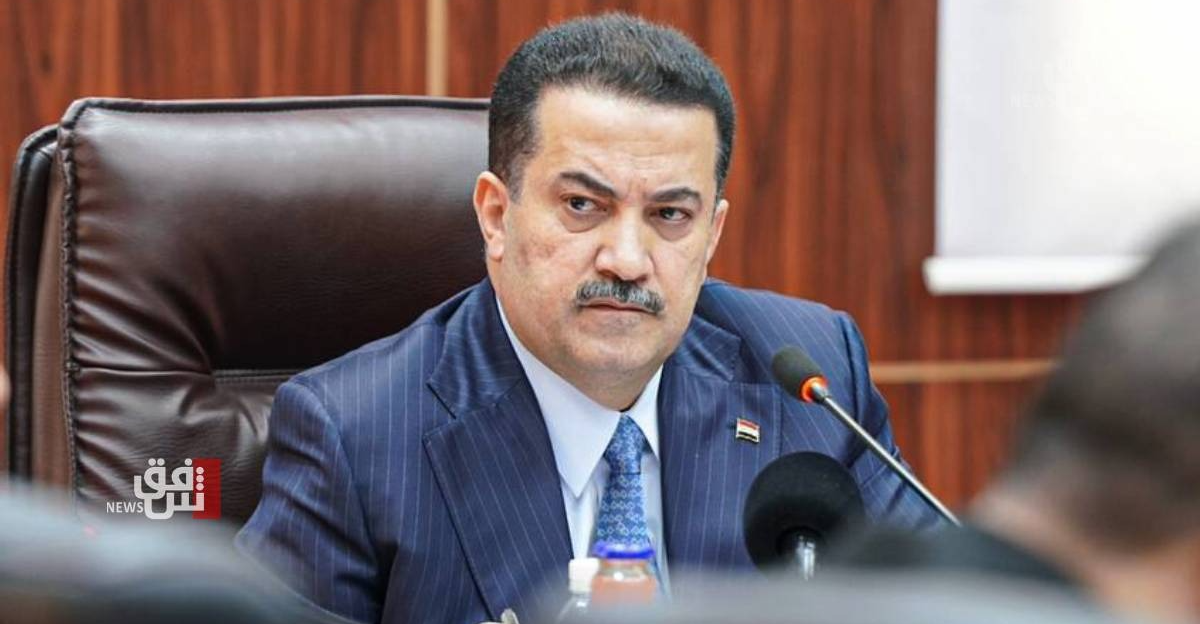 The media office of Iraqi Prime Minister Mohammed Shia al-Sudani confirmed on Thursday the suspension of appointments and contracts in all government departments, warning against attempts to entice citizens in this regard as part of the election campaign.
Al-Sudani’s office stated in a statement received by Shafaq News Agency, “It has been observed recently that political parties are trying to entice citizens and delude them into believing that there are appointments within government agencies.”
He added, “We affirm that the three-year budget law voted on by the House of Representatives stipulates in Article 14/Fourth A that appointments and contracts in all government departments be suspended.”
He continued, “Therefore, we call on citizens not to be drawn into these actions that seek to exploit them for personal ends and interests that fall within the scope of electoral propaganda.”
Shafaq.com
Posted in Uncategorized
Comments Off on Al-Sudani’s office confirms the suspension of appointments and contracts in all government departments.
Iraq to drill 27 new oil wells during the first half of 2025
Iraq to drill 27 new oil wells during the first half of 2025
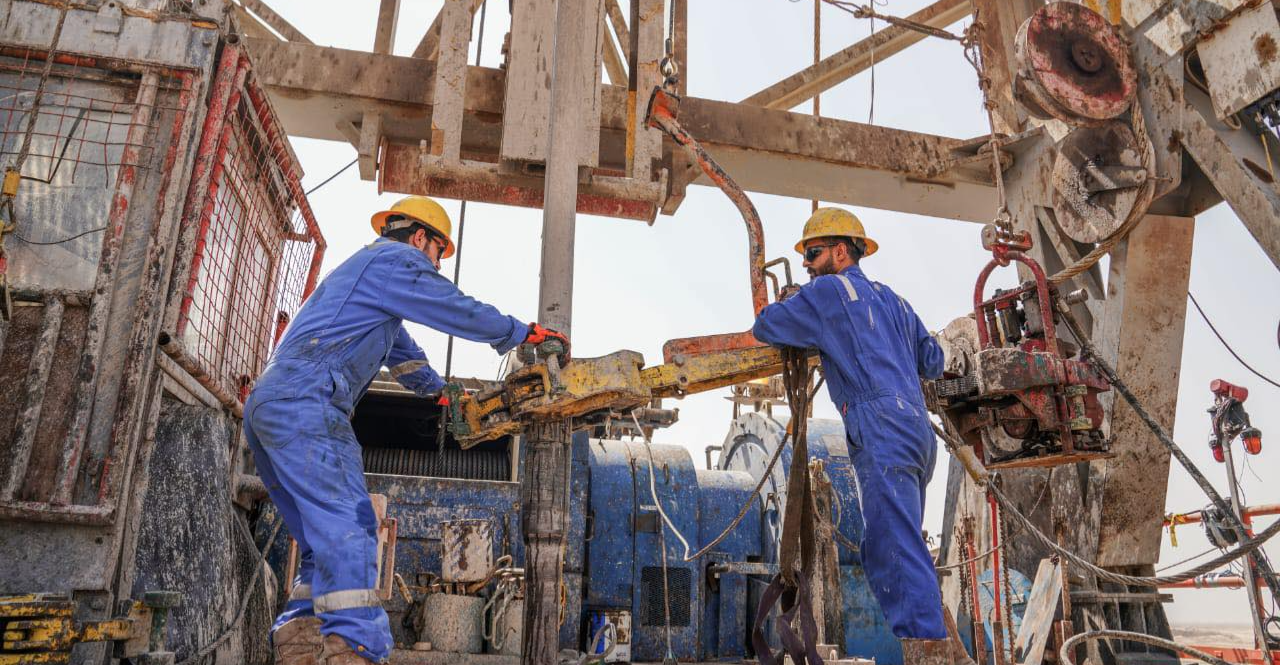 The Ministry of Oil announced on Thursday that the Iraqi Drilling Company will complete the drilling and rehabilitating of 113 oil wells during the first half of 2025.
The ministry said in a statement today that the company’s staff completed the drilling of 27 new wells and the reclaiming of 86 wells during the first half of 2025, in support of the ministry’s plans to increase production rates and enhance the efficiency of oil fields.
The statement quoted the company’s general manager, Hassan Mohammed Hassan, as saying that these figures reflect the commitment of national cadres who continue to work efficiently despite the challenges on the ground. He emphasized the senior management’s commitment to developing employees’ capabilities and providing an integrated and safe work environment that ensures achieving the best results within the scheduled timelines.
He added that the company is proceeding with its upcoming projects in line with a vision to expand the scope of drilling and reclamation operations, contributing to supporting the national economy and keeping pace with the aspirations of the energy sector in Iraq.
Shafaq.com
Posted in Uncategorized
Comments Off on Iraq to drill 27 new oil wells during the first half of 2025
Minister: Kurdistan has agreed to all of Baghdad’s demands, but it is seeking to limit the region’s economy.
Minister: Kurdistan has agreed to all of Baghdad’s demands, but it is seeking to limit the region’s economy.
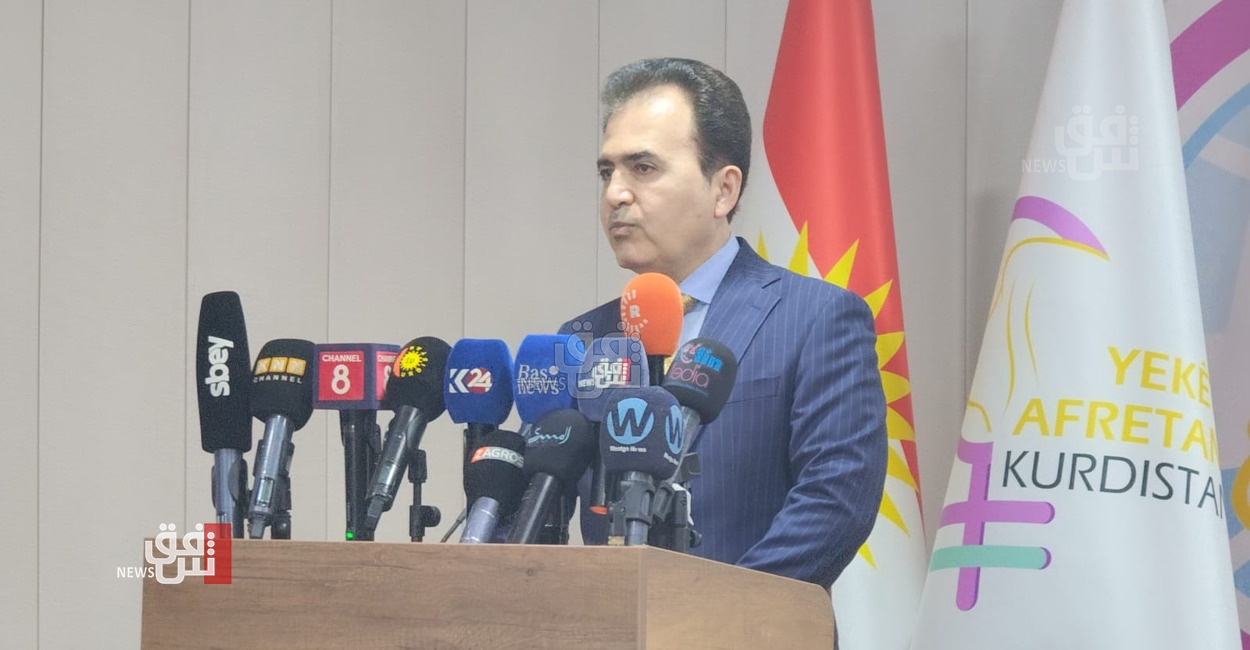 Kurdistan Region Minister of Endowments and Religious Affairs Pshtiwan Sadiq criticized the federal government’s handling of the region on Thursday, particularly regarding the issue of funding monthly salaries for public sector employees and workers, despite the Kurdistan Regional Government’s agreement to all Baghdad’s demands in this regard.
In a speech delivered to a group of religious leaders in Erbil, Sadiq said that Baghdad has been causing problems for the people of the Kurdistan Region since 2014.
He added that the Kurdistan Region had agreed to all federal government demands and to hand over oil and non-oil revenues in exchange for securing salaries for employees in the region. However, Baghdad was not committed to implementing the agreements and conditions it set.
The minister also pointed out that the federal government is trying to weaken and marginalize the Kurdistan Region economically.
Sadiq continued, “The opposition parties in Kurdistan are playing a detrimental role and are seeking to undermine the constitutional entity of the region. This is extremely dangerous, as any alternative to this entity would be disastrous.”
In a parallel development, the region’s Minister of Health, Saman Barzinji, said in a speech he delivered during the laying of the foundation stone for the rehabilitation of a hospital in Erbil, “We are still groaning under the financial crisis that the Kurdistan Region is experiencing.”
He added, “We hope the federal government will lift the collective punishment imposed on the people of Kurdistan and ratify the agreements as soon as possible.”
Shafaq.com
Posted in Uncategorized
Comments Off on Minister: Kurdistan has agreed to all of Baghdad’s demands, but it is seeking to limit the region’s economy.
Mysterious messages reach Iraqi politicians: “Don’t be puppets”… “A decisive response awaits”
Mysterious messages reach Iraqi politicians: “Don’t be puppets”… “A decisive response awaits”
 An Iraqi security expert revealed on Thursday that warning messages had been sent from international bodies to a number of politicians in the country, warning against targeting international coalition forces and threatening a decisive response in the event of any attacks.
Security and strategic expert Saif Raad told Shafaq News Agency, “Since last Saturday, a limited number of Iraqi politicians have received text messages on their personal numbers from international sources, warning them of the consequences of any attack that might target international coalition forces in Iraq.”
He explained that the messages received included direct phrases, including: “A warning to Iranian militias. Any attacks on coalition forces will be responded to swiftly and decisively.” Another read: “Iranian militias continue to endanger Iraqis. Don’t be puppets in Iran’s hands.”
Raad added, “These messages were also accompanied by a voice call relaying the same warnings, indicating a coordinated cyber attack that coincided with security operations in Kirkuk, Baiji, Dohuk, and Sulaymaniyah.”
He concluded by saying, “Iraq is facing sensitive and dangerous security and military developments, and the current escalation could push the country onto a more complex path of confrontation, requiring extreme caution to avoid slipping into a broader conflict.”
Over the past few days, Iraq has witnessed a series of simultaneous attacks believed to be carried out by drones amidst regional tensions and growing domestic escalation, prompting observers to warn of the possibility of the attacks expanding to include international coalition forces.
Shafaq.com
Posted in Uncategorized
Comments Off on Mysterious messages reach Iraqi politicians: “Don’t be puppets”… “A decisive response awaits”
A slight decrease in Iraq’s domestic public debt
A slight decrease in Iraq’s domestic public debt
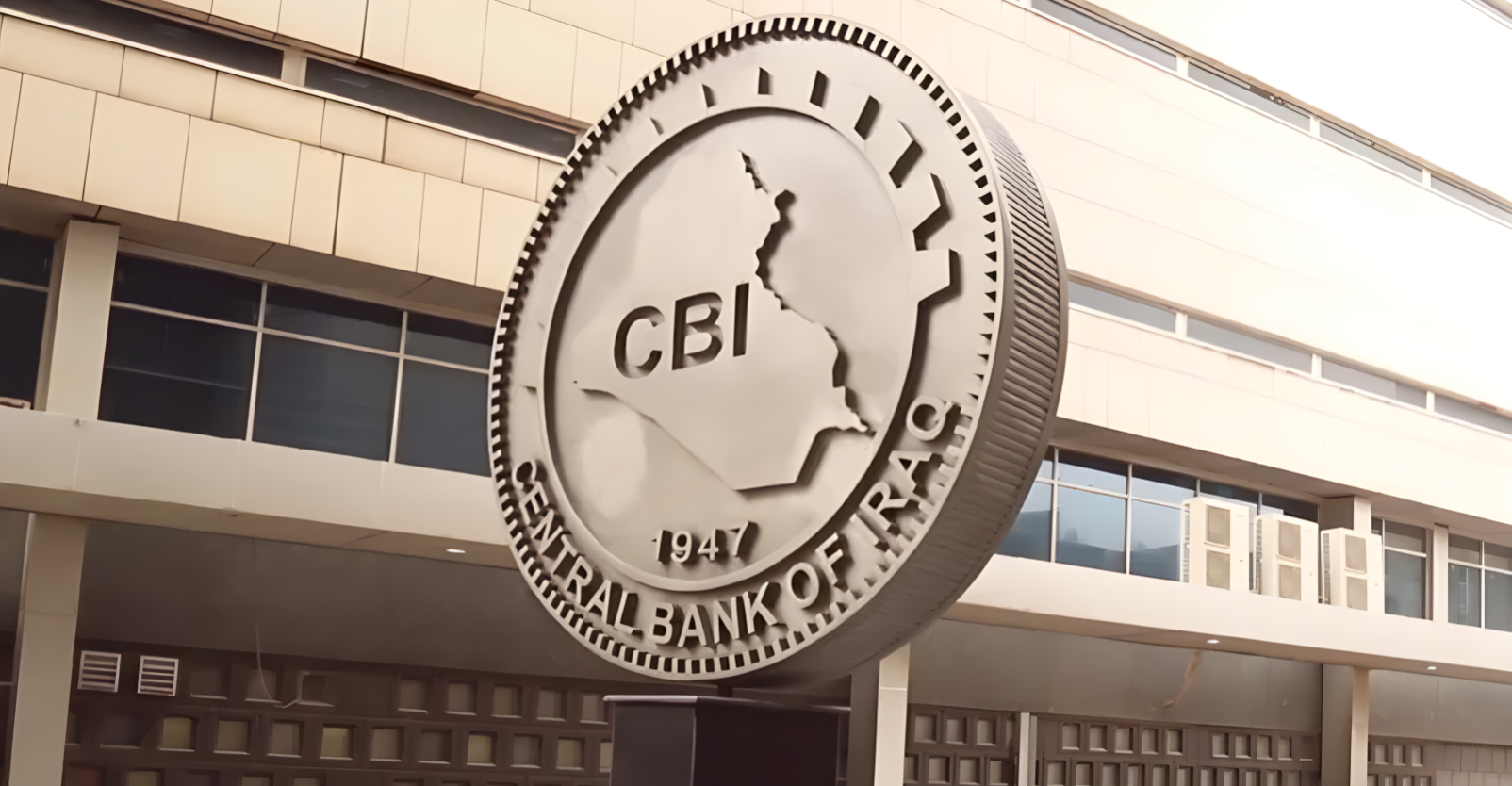 The Central Bank of Iraq announced today, Thursday, a slight decrease in domestic public debt by the end of April 2025.
The bank said in official statistics seen by Shafaq News Agency that “Iraq’s domestic public debt decreased at the end of April of this year to reach 85 trillion and 503 billion Iraqi dinars, down from 85 trillion and 536 billion dinars in March.”
The bank added that “the decline was a result of repayments of loans to financial institutions, which reached $19 trillion and 119 billion, down from $19 trillion and 152 billion.”
He pointed out that “the remaining debts are owed by the Ministry of Finance, amounting to 756 billion dinars, and treasury transfer debts at the Central Bank and commercial banks, amounting to 51 trillion and 30 billion dinars, in addition to treasury transfers on the account of the Ministry of Finance amounting to 2 trillion and 30 billion dinars, and national term debts due to farmers amounting to 12 trillion and 568 billion dollars.”
Shafaq.com
Posted in Uncategorized
Comments Off on A slight decrease in Iraq’s domestic public debt
Iran provides 200,000 Iraqi dinars to each Arbaeen pilgrim.
Iran provides 200,000 Iraqi dinars to each Arbaeen pilgrim.
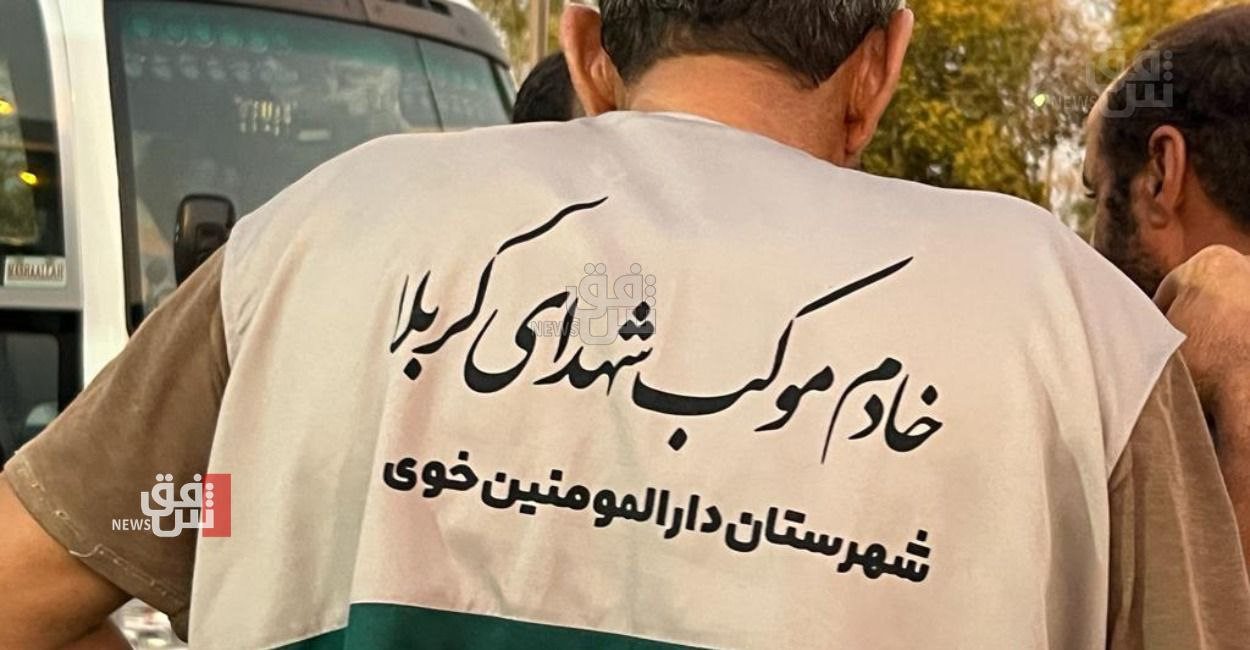 The Central Bank of Iran announced on Thursday that it will provide 200,000 Iraqi dinars to every Iranian visitor traveling to Iraq for the Arbaeen pilgrimage.
The bank’s public relations director, Mustafa Qamariova, said in a statement reported by Tasnim News Agency that the bank will soon begin distributing the Arbaeen currency, in accordance with the policies followed in recent years.
Qamariova explained, “This year, the Central Bank will also, in accordance with its policy over the past years, provide local Iraqi currency to Arbaeen pilgrims.”
He confirmed that “the necessary preparations have been completed, and details and mechanisms for the exchange and sale of the currency (200,000 Iraqi dinars for each visitor) will be announced soon through the electronic systems of the designated banks.”
Thousands of Iranians travel to Iraq every year to participate in the Arbaeen pilgrimage of Imam Hussein, through land border crossings.
Shafaq.com
Posted in Uncategorized
Comments Off on Iran provides 200,000 Iraqi dinars to each Arbaeen pilgrim.
Iraq plans to receive 4 million containers annually at Umm Qasr Port.
Iraq plans to receive 4 million containers annually at Umm Qasr Port.
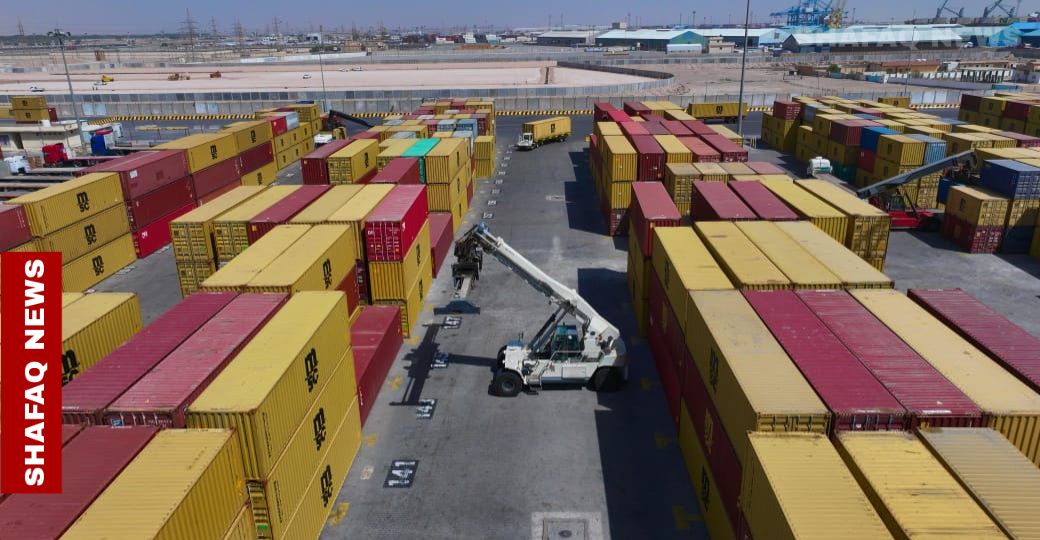 Umm Qasr Port in Basra is undergoing rapid development as part of a plan to modernize its infrastructure and enhance its operational capabilities, aiming to increase its annual capacity to 4 million containers.
The port is considered one of the most prominent Iraqi ports, playing a vital role in supporting the national economy and connecting Iraq to global markets. This is achieved through development projects that include expanding docks, establishing advanced storage yards, and adopting modern digital technologies that contribute to accelerating handling operations and improving logistical efficiency.
Investment companies
Several investment companies are responsible for operating and developing various parts of the port. These include the Emirati company Gulftainer, which operates several docks and storage yards and provides integrated customs and logistics services. The Chinese investment company Lorain is also responsible for implementing projects to expand the docks designated for rolling goods and develop large backyard storage areas. These companies, in cooperation with Iraqi personnel, are also contributing to the introduction of digital operating systems that increase performance efficiency and reduce waiting and clearance times.
In this regard, Gulftainer’s Regional Director, Ibrahim Sarhan, told Shafaq News Agency, “Operations at the terminal operated by the company have witnessed a significant shift in recent years,” adding that “the approved electronic system creates a storage plan before the ship arrives, reducing waiting times and increasing handling efficiency.”
He added, “The terminal was built on an area of 450,000 square meters and includes storage yards, refrigerated warehouses, and customs and security facilities operating around the clock.” He emphasized that “customs clearance takes no more than 48 hours, which expedites the movement of goods, especially for sectors such as oil and gas.”
Earthquake-resistant sidewalks
Meanwhile, Naim Abboud, chief engineer at the Resident Engineer’s Department, told the agency, “Lorain Investment Company is developing docks (22, 23, and 24) designated for rolled goods, which were built using an earthquake-resistant heavy wall method.” He explained that “the area of the backyards is 384,100 square meters, and the completion rate has reached 50%.”
Aboud pointed out that “berths (12, 13, 14 and 15) are close to completion, with a completion rate of 97%, while the storage yard (BTM) is 100% complete, covering an area of 400,000 square metres, with a design capacity ranging between 700,000 and 850,000 containers annually.”
For his part, the technical assistant to the port director, Muhammad Tahir Fadhel, told the agency, “Beach (11) extends 375 meters in length, and the area of its container yard is 307,000 square meters, and its operational capacity reaches 636,000 containers annually, and it is managed by Gulftainer.”
He added that “the quays being implemented by Lorain extend 550 meters in length and have a design capacity of 850,000 containers annually,” noting that “the total capacity of the new yards is estimated at 1.2 million containers, with facilities allocated for refrigerated and empty containers and handling various goods.”
Earlier, the General Company for Iraqi Ports revealed to Shafaq News Agency its comprehensive plan for the port, which aims to increase the design capacity to 4 million containers annually, compared to just 1 million containers in 2024. This is part of a strategic vision to transform Iraqi ports into highly competitive regional supply centers.
Shafaq.com
Posted in Uncategorized
Comments Off on Iraq plans to receive 4 million containers annually at Umm Qasr Port.