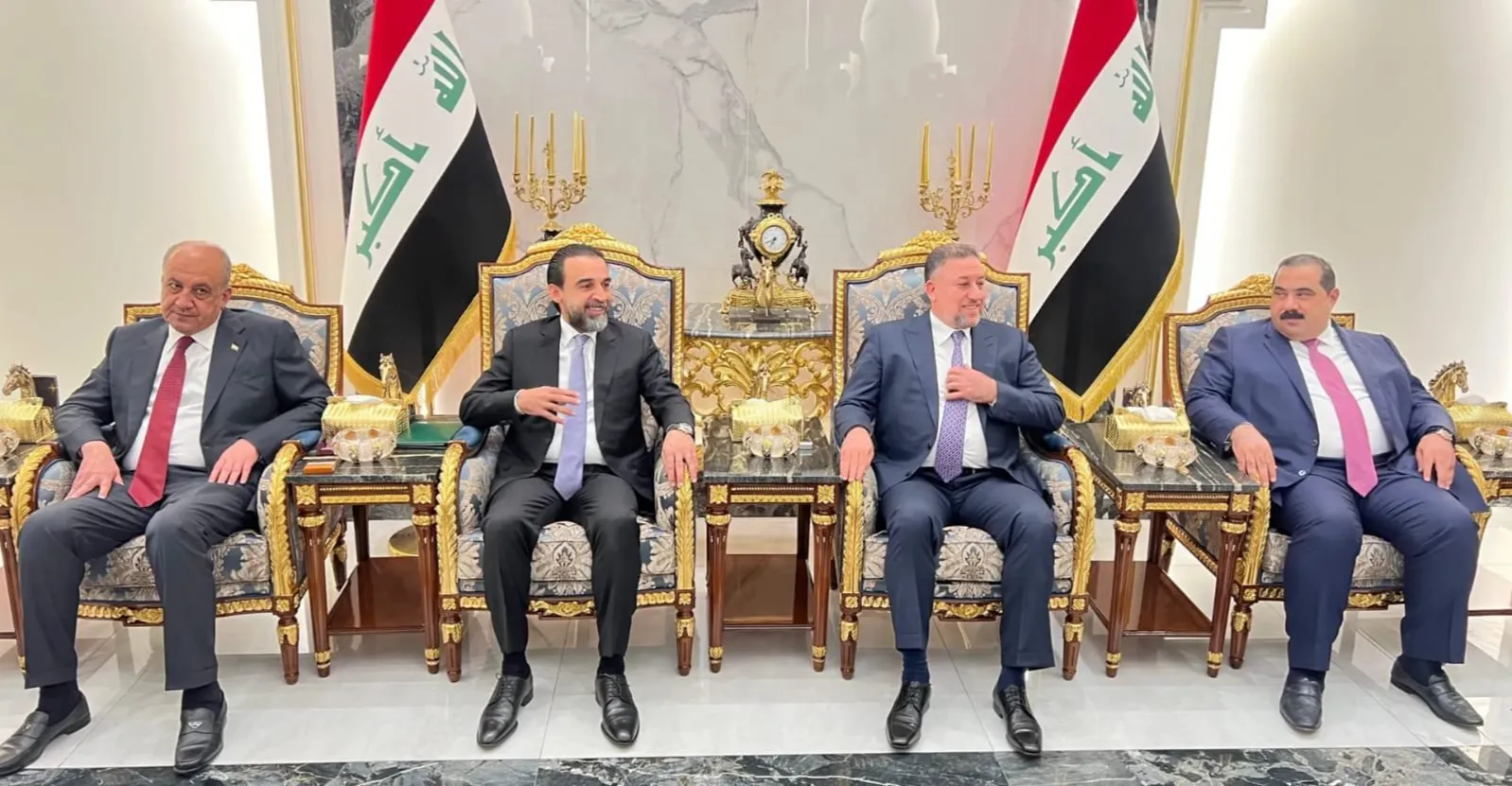
Iraq joins oil-producing countries opposing “green fuel” regulations.

Iraq joins oil-producing countries opposing “green fuel” regulations.

Iraq joins oil-producing countries opposing green fuel regulationsThe Iraqi government announced on Thursday that it has joined the countries opposing the new “green fuel” regulation proposed by the International Maritime Organization.

Iraq has joined Bahrain, Iran, Kuwait, Saudi Arabia, the UAE, Venezuela, and Yemen in opposing the new “green fuel” regulation being developed by the International Maritime Organization, arguing that its current implementation would impose unjustified financial burdens on the shipping sector.

The eight countries submitted a joint memorandum last July, calling on member states to reconsider adopting the regulation, citing “ambiguity and gaps” in the proposed procedures, making it premature to proceed with implementation.

The new rules, scheduled for a final vote in October, aim to reduce greenhouse gas emissions from ships by 4% below 2008 levels by 2028, reaching 30% by 2035, with fines imposed on companies that fail to comply.

Iraq and its allies believe these regulations could raise marine fuel costs and increase pressure on the shipping sector, at a time when the availability of low-carbon fuels is expected to remain limited in the near term.

Shafaq.com

Posted in Uncategorized | Comments Off on Iraq joins oil-producing countries opposing “green fuel” regulations.

An economic expert proposes amending the criteria for Iraqi banking reform.

An economic expert proposes amending the criteria for Iraqi banking reform.

An economic expert proposes amending the criteria for Iraqi banking reformOn Thursday, economic expert Ahmed Abd Rabbuh called for amending the banking reform standards announced by the Central Bank of Iraq. The amendments include adding a clause allowing some banks to operate domestically under the central bank’s supervision, while other banks would apply international standards if they wish to operate internationally.

Abdul Rabbo told Shafaq News Agency, “Central Bank Governor Ali Al-Alaq revealed a comprehensive plan for banking reform, and he is counting on the media’s important role in clarifying this issue in a transparent and accurate manner.”

He explained that “among the proposals submitted by specialists to the Central Bank Governor is to allow some banks to operate internally under the direct supervision of the bank, while the remaining banks apply international standards with partners such as Oliver Wyman.”

He pointed out that “it is important to open an expanded dialogue between the Central Bank and Iraqi banks to clarify the technical aspects of the document and discuss mechanisms for implementing reform gradually, taking into account the specificities of Iraq’s economic reality. There is also a need to commit to reform in principle, while formulating standards and procedures in a manner that enhances confidence in the banking sector and contributes to its development.”

Abdul Rabbo pointed out the importance of adopting a participatory and consultative approach between the Central Bank and banks, through the formation of joint technical committees to review reform requirements and ensure their compatibility with the national financial and economic reality. This will maintain a balance between reform requirements and the capabilities of Iraqi banks, and ensure the protection of the interests of local and international investors and those working in the sector.

It’s worth noting that the Governor of the Central Bank of Iraq, Ali Al-Alaq, held a meeting on Tuesday with the international company Oliver Wyman to discuss the details of the banking reform plan submitted by the Iraqi Private Banks Association. This meeting is part of efforts to develop the banking sector and align it with international standards.

Shafaq.com

Posted in Uncategorized | Comments Off on An economic expert proposes amending the criteria for Iraqi banking reform.

Baghdad and Erbil agree on a new mechanism for exporting Kurdistan Region oil.

Baghdad and Erbil agree on a new mechanism for exporting Kurdistan Region oil.

Baghdad and Erbil agree on a new mechanism for exporting Kurdistan Region oilA source in the North Oil Company in Kirkuk province reported on Thursday that the company will serve as a major hub for receiving and storing Kurdistan’s oil before pumping it through the Turkish port of Ceyhan for export.

The source told Shafaq News Agency, “The final agreement was signed by delegations from Baghdad and Erbil, and includes a memorandum of understanding that will pave the way for ending the export suspension crisis that has cost Iraq billions of dollars in losses.”

The source continued, “The agreement will contribute to the storage of oil delivered by the regional government to the Ministry of Oil, as the North Oil Company will be the main center for receiving and storing the oil before pumping it through the Turkish port of Ceyhan for export.” He confirmed that “the agreement will enter into force in the coming days, after which exports to the port will resume.”

The Ministry of Natural Resources of the Kurdistan Regional Government and the Federal Ministry of Oil announced yesterday, Wednesday, that an agreement had been reached on the mechanism for exporting the region’s oil, following a series of meetings and technical consultations that have extended since July 17.

The Ministry of Natural Resources said in a statement received by Shafaq News Agency that the meetings included field visits to all oil fields in the region, followed by a comprehensive assessment of technical issues and intensive discussions. The discussions resulted in an agreement on August 11th to export oil based on the daily production of the region’s fields, with 50,000 barrels per day allocated to meet domestic needs, and the remaining quantity delivered to the State Oil Marketing Organization (SOMO) for export.

She noted that “the resumption of exports remains linked to the outcome of discussions between the federal and Turkish governments, and the implementation of the necessary measures to begin the process.”

Kurdistan Region oil exports via the Turkish-Ceyhan pipeline were halted in March 2023, following a ruling by the International Chamber of Commerce’s Court of Arbitration in Paris, which required Turkey to pay compensation to Iraq for allowing the region’s oil exports without federal government approval.

Since then, negotiations have been underway between Baghdad and Erbil, with the participation of Ankara, to reach a formula that guarantees the resumption of exports within an agreed-upon legal and technical framework, amid losses estimated at billions of dollars due to the disruption of supplies.

Shafaq.com

Posted in Uncategorized | Comments Off on Baghdad and Erbil agree on a new mechanism for exporting Kurdistan Region oil.

300 MW solar energy project in the Karbala desert

300 MW solar energy project in the Karbala desert

300 MW solar energy project in the Karbala desert Energy and BusinessIraqi Electricity Minister Ziyad Ali Fadhil announced on Tuesday that work on the Karbala Solar Power Plant project, the first solar project to be integrated into the national electricity grid, is continuing.

A statement issued by his office, seen by Shafaq News Agency, stated that the project’s total capacity is 300 megawatts, and that it will be built on an area of up to 4,000 acres. He noted that it is one of the most prominent renewable energy projects in Iraq.

The project is being implemented under the supervision of the General Company for Energy Production – Middle Euphrates, and with investment from Al-Bilal Group Company.

The Minister of Electricity explained that the number of solar panels installed so far has reached 39,000, out of a total of half a million solar panels to be installed as part of the project.

The Minister affirmed that the Ministry is closely monitoring the implementation phases, emphasizing its commitment to expanding the share of renewable energy in the country’s total electricity production, as part of the drive towards clean and sustainable energy sources.

Shafaq.com

Posted in Uncategorized | Comments Off on 300 MW solar energy project in the Karbala desert

SVR: US-UK talks to replace Zelensky with Zaluzhny

SVR: US-UK talks to replace Zelensky with Zaluzhny

SVR - US-UK talks to replace Zelensky with ZaluzhnyRussia’s Foreign Intelligence Service (SVR) revealed on Tuesday that the United States and the United Kingdom are considering replacing Ukrainian President Volodymyr Zelensky.

The agency added that the discussions were attended by Zelensky’s chief of staff, Andriy Yermak, the head of Ukrainian military intelligence, Kyrylo Budanov, and the former commander-in-chief of the Ukrainian Armed Forces and current ambassador to London, Valeriy Zaluzhny.

Russian intelligence reported that Washington and London have decided to nominate Zaluzhny for the presidency of Ukraine, adding that “replacing Zelensky has become a prerequisite for restructuring Kyiv’s relations with the West, particularly with the United States,” according to the statement.

Zelensky’s term was supposed to end in 2024, but martial law imposed by Ukraine in February 2022 prevented presidential and parliamentary elections from taking place.

Washington has previously stated that it wants Kyiv to hold elections, possibly by the end of the year, especially if Kyiv can agree to a truce with Moscow in the coming months.

Russian President Vladimir Putin has publicly stated that he does not believe Zelenskyy is a legitimate leader in the absence of a new electoral mandate, and that the Ukrainian president does not have the legal right to sign binding documents related to a potential peace agreement.

Shafaq.com

Posted in Uncategorized | Comments Off on SVR: US-UK talks to replace Zelensky with Zaluzhny

The President of the Republic issues a decree appointing Al-Atwani as Governor of Baghdad

The President of the Republic issues a decree appointing Al-Atwani as Governor of Baghdad

The President of the Republic issues a decree appointing Al-Atwani as Governor of Baghdad Iraqi President Abdul Latif Jamal Rashid issued a presidential decree on Tuesday appointing Atwan al-Atwani as head of the local government of the capital, Baghdad.

Rashid, in accordance with the decree he signed on July 29, directed the relevant authorities to implement the decree from the date of its issuance, and it will be published in the Official Gazette.

On Sunday evening, July 27, the Baghdad Provincial Council elected Atwan al-Atwani, a leader in the State of Law Coalition and head of the Parliamentary Finance Committee, as the new governor.

On Saturday, July 26, President Abdul Latif Jamal Rashid approved the retirement of Baghdad Governor Abdul Muttalib Al-Alawi.

This is the second time Al-Alawi has been referred to retirement. The council previously voted to dismiss him on July 3, at which time Haider Mohan was elected as the new governor.

Shafaq.com

Posted in Uncategorized | Comments Off on The President of the Republic issues a decree appointing Al-Atwani as Governor of Baghdad

Iraq’s financial revenues exceed 46 trillion dinars in five months.

Iraq’s financial revenues exceed 46 trillion dinars in five months.

Iraqs financial revenues exceed 46 trillion dinars in five monthsThe Ministry of Finance revealed on Tuesday that Iraq’s federal budget revenues from January to May 2025 exceeded 46 trillion dinars, confirming that oil accounts for 91% of the budget.

Shafaq News Agency followed up on the data and tables issued by the Ministry of Finance in June for the fiscal year’s accounts for the first five months of the current year. The data showed that oil remains the primary source of revenue for Iraq’s general budget, accounting for 91% of the total. This indicates that the rentier economy is the foundation of the country’s general budget.

The financial tables indicated that total revenues amounted to 46 trillion, 157 billion, 110 million, 408 thousand, and 761 dinars.

According to the tables, oil revenues amounted to 41 trillion, 930 billion, 805 million, and 332 thousand dinars, representing 91% of the general budget, while non-oil revenues amounted to 4 trillion, 226 billion, 305 million, and 75 thousand dinars.

She indicated that the total salaries of employees amounted to 27 trillion, 653 billion, 233 million, and 819 thousand dinars, while retirement salaries amounted to 7 trillion, 953 billion, and 199 million dinars, and social network salaries amounted to 2 trillion, 329 billion, 435 million, and 774 thousand dinars.

According to the budget, total expenditures for current expenses amounted to 43 trillion, 951 billion, 426 million, and 654 thousand dinars.

In March 2021, the Prime Minister’s financial advisor, Mazhar Mohammed Salih, told Shafaq News Agency that the reasons for the economy remaining rentier are due to the wars and economic blockade imposed on Iraq during the past era, as well as the political conflicts the country is currently witnessing, which have led to the dispersion of economic resources.

The Iraqi state’s continued reliance on oil as its sole source of public finances places it at risk from the global crises that occur from time to time, due to the impact of oil prices. This forces the country to each time resort to covering its deficit through external or domestic borrowing. This indicates an inability to manage state finances effectively and an inability to find alternative financing solutions.

Shafaq.com

Posted in Uncategorized | Comments Off on Iraq’s financial revenues exceed 46 trillion dinars in five months.

Türkiye demands Iraq guarantee “full use” of the Kirkuk-Ceyhan pipeline through a new agreement.

Türkiye demands Iraq guarantee “full use” of the Kirkuk-Ceyhan pipeline through a new agreement.

Türkiye demands Iraq guarantee full use of the Kirkuk-Ceyhan pipeline through a new agreementTurkish Energy Minister Alparslan Bayraktar confirmed on Tuesday that his country demands that the proposed new agreement with Iraq include a “mechanism ensuring full use” of the Kirkuk-Ceyhan oil pipeline, as part of ongoing negotiations to expand the bilateral agreement in the energy sector.

Bayraktar noted, in statements following the cabinet meeting, that the pipeline’s capacity is approximately 1.5 million barrels per day, but “even during operational times, it has not been used at full capacity.”

The pipeline has been inactive since 2023, following an arbitration ruling that ordered Türkiye to pay $1.5 billion to Baghdad for unauthorized oil exports between 2014 and 2018, a ruling Ankara is still appealing.

Ankara stated that the decades-old agreement will expire in July 2026, and it proposes extending it to include cooperation in the fields of gas, electricity, and petrochemicals, in addition to oil.

The Turkish minister did not rule out the possibility of extending the pipeline to southern Iraq, noting that “the path to full capacity necessarily passes through the south.”

Bayraktar linked this to the “Development Road” project, which connects Basra to the Turkish border and then to Europe, for which initial Iraqi funding was allocated in 2023.

shafaq.com

Posted in Uncategorized | Comments Off on Türkiye demands Iraq guarantee “full use” of the Kirkuk-Ceyhan pipeline through a new agreement.

OPEC+ asks Iraq to submit a plan to compensate for excess oil production.

OPEC+ asks Iraq to submit a plan to compensate for excess oil production.

OPEC+ asks Iraq to submit a plan to compensate for excess oil productionThe OPEC+ Joint Ministerial Monitoring Committee (JMMC) has asked Iraq to submit an updated plan to compensate for excess oil production that exceeded its quota under production agreements.

The committee stressed the need for full compliance with the production cuts agreed upon by member states, emphasizing the importance of submitting a compensation plan before August 18, 2025.

This request comes as OPEC+ continues to closely monitor oil markets, amid moves to increase production by 548,000 barrels per day in September, as part of a gradual plan to ease some of the production cuts previously imposed by the organization.

The committee emphasized that adherence to production agreements is a fundamental pillar for maintaining oil market stability and supporting oil prices, especially given fluctuations in global demand.

The Joint Ministerial Monitoring Committee emphasized that its role is limited to monitoring member states’ compliance with production quotas. It does not have the authority to make final decisions regarding production levels, leaving this authority to official OPEC+ meetings.

It’s worth noting that OPEC+, which includes the world’s major oil producers including Iraq and Russia, currently produces about half of global oil production.

It had imposed strict production cuts in recent years to support the oil market, but since the beginning of 2025, it has begun gradually easing these cuts to regain its market share amid changing global demand.

In a related development, OPEC+ members are expected to hold a meeting in early August to discuss the possibility of an additional 548,000 barrels per day (bpd) increase in production for September, given the continued support for prices from summer demand and the failure of some countries to fully comply with their production quotas.

Shafaq.com

Posted in Uncategorized | Comments Off on OPEC+ asks Iraq to submit a plan to compensate for excess oil production.

Government program and economic policies revive the dinar

Government program and economic policies revive the dinar

Government program and economic policies revive the dinarIn its third year of implementation, the government program continues to make steady progress toward achieving its economic goals, despite the complex challenges posed by regional and international realities, particularly regarding the threat of war, fluctuations in energy markets, and volatile global economic cycles.

However, national growth indicators remain evident across various infrastructure sectors, supported by remarkable levels of economic stability, most notably the annual inflation rate remaining below the 3 percent mark. This indicates the ability of economic policy to absorb shocks and manage resources relatively efficiently.

qualitative transformations

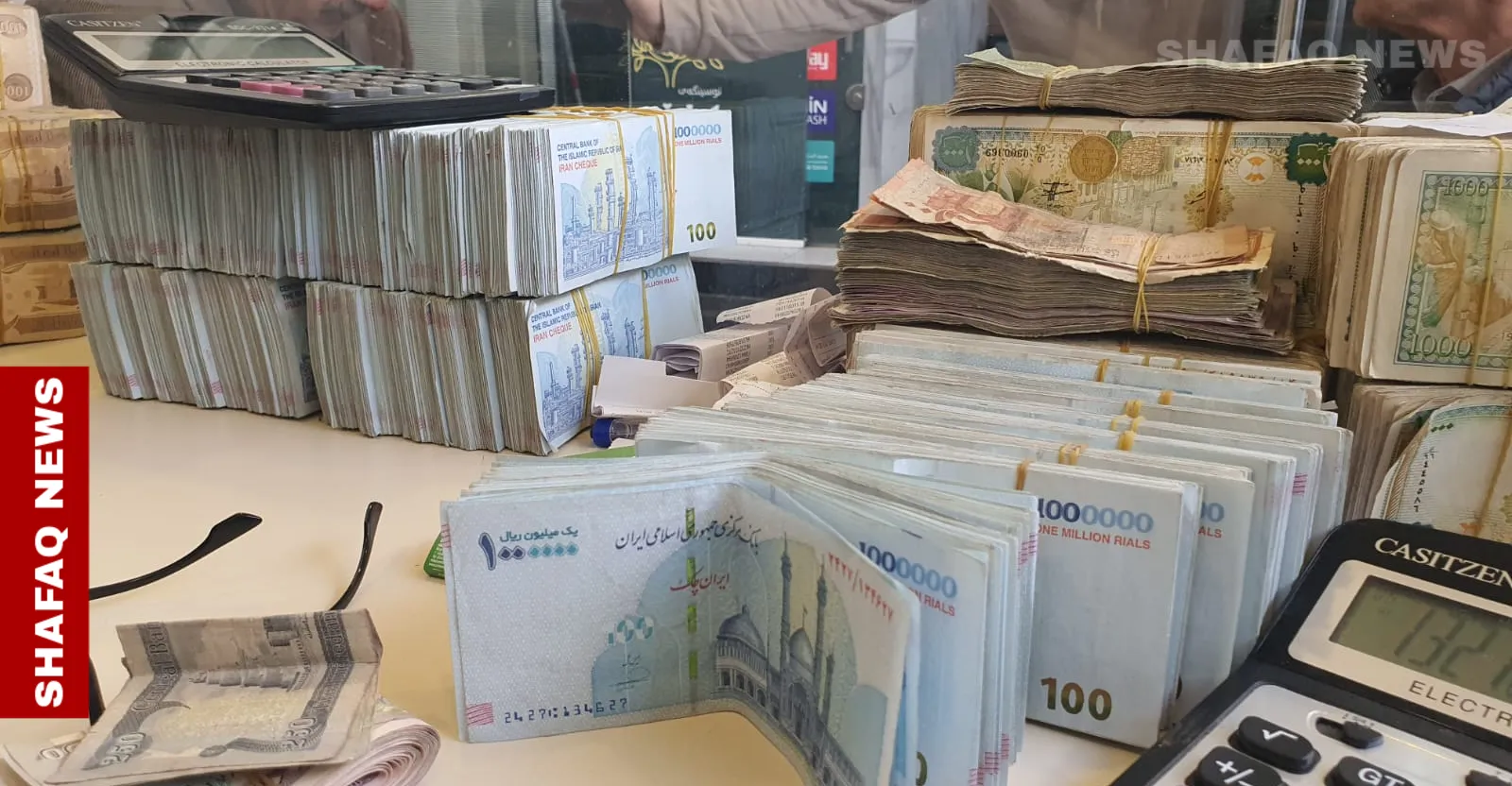
In this context, Dr. Mazhar Mohammed Saleh, the Prime Minister’s financial advisor, told Al-Sabah that the parallel currency market has witnessed a qualitative transformation over the past period. Previously, it was governed by “noisy patterns” that generated sudden price fluctuations. Today, it has become more stable and is gradually being driven by the official market.

Saleh attributes this shift to the effective coordination between fiscal, monetary, and trade policies, which contributed to the flow of accurate and well-thought-out information signals, enabling the market to shift from a state of volatility and speculation to a calmer trading environment more in line with the country’s economic reality.

Integrated procedures

Saleh adds that this positive shift is the result of a series of integrated measures that have contributed to narrowing the gap between the official and parallel dollar rates, most notably the strict legal ban on dollar use in domestic transactions, particularly in the real estate market, which is one of the most sensitive sectors.

He added, “The transition to a mechanism for financing foreign trade through global correspondent banks, rather than relying exclusively on the central bank’s window, has contributed to reducing compliance risks and decreasing reliance on the informal market.”

Another factor that has contributed to enhanced market stability, the advisor said, is the entry of small importers into the official dollar financing network, without the need for money exchange companies. This has facilitated their access to foreign currency at direct official exchange rates, especially since their trade represents approximately 60 percent of the private sector’s foreign trade.

Administrative facilities

Dr. Saleh points out that this transformation was achieved through administrative facilitation provided by the government and the reduction of bureaucratic loopholes that previously hindered import financing and implementation.

The financial advisor emphasized that the expanding use of electronic payment cards in foreign currency, particularly among travelers, has been an additional factor in reducing pressure on the cash dollar, given the availability of cash allocations at the official exchange rate through banking outlets located throughout airports, and with flexible and organized compliance mechanisms.

He pointed to the role played by cooperative societies, food baskets, and construction goods, which are imported in dollars at the official exchange rate of 1,320 dinars, in supporting the price stability policy. This has enabled the government to use trade as a tool to achieve monetary stability, as part of an integrated strategy for economic policies in implementing the government program.

Fluctuations in the US economy

In contrast, financial and economic expert Dr. Safwan Qusay pointed out that the Iraqi dinar, despite its relative resilience, remains vulnerable to the effects of global markets and fluctuations in the US economy. Speaking to Al-Sabah, he pointed out that the new customs restrictions imposed by the US administration on some imports have weakened exports from key countries such as China, Japan, the European Union, and Canada. This has led to a relative decline in the value of the US dollar globally, which opens the way for the Federal Reserve to consider reducing interest rates, which could negatively impact the dollar’s attractiveness as a reserve currency.

Qusay believes that the Iraqi market is often subsequently affected by these shifts, which may partly explain the recent decline in the dollar’s price in the informal market, due to the potential entry of cash dollars into Iraq via neighboring countries amid these changes.

strong bumpers

Qusay warns that the continued decline in the value of the dollar could pose future risks to the central bank’s reserves, especially with an increasing number of countries diversifying their reserves away from the US dollar and resorting to gold or other currencies. However, Qusay emphasized that Iraq still possesses strong buffers that protect it from these risks, most notably its massive dollar reserves at the central bank and its possession of more than 116 tons of gold, which is also witnessing a rise in value globally. He also points out that current oil prices remain at levels sufficient to ensure the stability of the dinar in the long term.

near.

Qusay believes that maintaining this stability requires the Central Bank to review its reserve management strategies and ensure they are not affected by dollar fluctuations. He also believes that it is necessary to accelerate steps to diversify the economy and control revenues and expenditures to avoid any potential repercussions of the dollar’s decline on the value of the Iraqi dinar.

Alsabaah.iq

Posted in Uncategorized | Comments Off on Government program and economic policies revive the dinar