Devaluation of the dinar and its impact on the Iraqi economy
Under the current economic circumstances, coupled with the government’s confusion in managing iraq’s monetary and financial policies, the devaluation of the currency (devaluation) of the Iraqi dinar against the U.S. dollar and other currencies has emerged deliberately and deliberately, noting that this is different from the change in the exchange rate that is subject to the supply and demand process in the currency markets.
I saw a while ago a study prepared by the Central Bank on this subject and after careful consideration of this matter and many discussions with experts and specialists and i think iraq needs such economic solutions at the present time I thought that the clearest realistic point of view might contribute to the development of a certain opinion among the decision makers in this regard. In normal circumstances, this type of solution must be the last medicine, but unfortunately the mismanagement of the country’s economy, the absence of economic doctrine, the continued dependence on oil as a single source and the exploitation of the economy as an electoral tool led to a collapse in the economy as the price of oil declined, and the failure of successive governments to support the national industrial and agricultural product prompted specialists to resort to this kind of thinking. I may agree with the study conducted by the Central Bank on many points that talk about the need to find economic solutions other than the devaluation of the Iraqi dinar, but through experience and extrapolation of the Iraqi political situation, I do not see in sight any ability of the solution and contract owners to bring about a radical economic change due to the lack of a real understanding of the problem in Iraq and look at it from a single perspective that may be factional, partisan or personal, so my article will focus on the discussion of the devaluation of the local currency vis-à-vis currencies.
Foreign and respond to factors that affect or are associated with the reduction process. For the purpose of taking note of the subject in all respects, the factors associated with this reduction, the most important of which are:
First: Balance of payments
I don’t think That Iraq has a strong position in the balance of payments because Iraq’s exports are only 99 percent oil, and if we raise or eliminate the value of the oil exported and calculate the balance of payments without it, Iraq’s position will be very negative. It is worth mentioning that the central bank’s study on the balance of payments surplus ratio, estimated at 5.75 percent of GDP for 2019, is primarily in terms of including the balance of oil exports or changing this balance by changing world oil prices and on the other hand discussing a real and important question of how to calculate iraq’s GDP? What is the value of oil exports? This question also applies to the ratio ofThe foreign reserves available in Iraq, which is estimated at $70 billion, which represents 30 percent of GDP according to the study, here is the same problem, which is how to calculate the gdp, and therefore how to calculate the adequacy of reserves by IMF or other traditional measures, it is clear that there is a deficit in the balance of payments because our balance of payments depends very largely on oil and therefore the deficit or surplus or strong position depends on the price of oil globally and the amount of production and the amount of oil exported from Iraq, so The study that gave metrics for 2019 is totally different from the current reality of the year 2020 Because of the fall in oil prices and here I agree with a statement in the central bank study that (when the balance of payments deficit is a reason for resorting to a devaluation of the local currency) this is not the case for Iraq in 2019 but it applies exactly to Iraq in 2020.
Second: Consumer Prices
There may be an impact on the devaluation of the Iraqi dinar in consumer prices, but there are many positive aspects in this context that can be taken advantage of and turn this challenge into a real opportunity to build an economic doctrine that fits the situation. current political and social.
The percentage of imports in Iraq is very large and the annual rate of hard currency that comes out of the country for the purpose of importing is estimated at $48 billion per year and if the price of the dinar is reduced, these imported items will be worth more expensive than their current value in the local market, which will lead to a decrease in demand in the local market, and here is the link of the Persians to refute all the claims that expect high living due to the devaluation of the Iraqi dinar because this The reduction must be accompanied by a set of economic measures that are supportive of it, the most important of which is the control of the prices of food and fuel, while the rest of the consumables that are imported, which are factors of destruction of the country’s economy, can be addressed and accept a certain increase in the prices of some unnecessary luxury items.
Therefore, there must be packages in the application of this reduction in order to encourage the national product and it is possible to give a simple example in this context if there is a material imported from the neighboring countries and the value of this material is only one dollar, i.e. it is currently worth 1200 Iraqi dinars and the cost of producing local raw materials may cost the owner The Iraqi factory 1300 Iraqi dinars so the local product can not compete with the imported product at a price because of the relatively high value of the dinar, but if the value of this material is one dollar at the exchange rate of 1500 Iraqi dinars and the value of the local product for the same article 1300 Iraqi dinars will be the local product will be cheaper than the importer at local value and thus this will encourage the owners of factories or farms to produce locally labor and run the cycle of the overall economy again, so this reduction will have a role Significant support for local product, it has been noted that the central bank study talked about the availability of local products as an alternative and here we say that the base The egg and the chicken must end in Iraq, meaning are we working in a local industry to stop imports or to stop imports in order to encourage national production?
I think it is time to break this rule and the state to put an end to imports in order to encourage production and because capital is cowardly and factory owners will not risk their money in order to provide a material that has no market or no start or a competing foreign product at a lower price and the state has to be firm and codify imports so that manufacturers can produce and make the domestic product competitive, it is worth noting that there is a specific period of time when some products are less available in the market, but I think that the national product is less available in the market, but I think the national product is less available. Soon it will fill the void and we will begin a new phase of the Iraqi economy.
Third: Level of inflation
Iraq currently does not suffer any rise in the level of basic inflation, so the effect of the devaluation of the currency in the level of base inflation will be limited in the sense that if we reduce the currency by 30 percent the prices of some luxury items will increase by 12 percent and this price increase can be addressed by moving the economy even if we have to increase nominal salaries and move the economy by injecting cash in the street to move some industrial, agricultural and construction sectors.
Fourth: Increased economic growth and trade
The central bank’s study on the impact of devaluation on increased trade growth showed that the relationship between devaluation, trade deficit and national economic stimulus is conditional and specific to factors such as:
Among them are:
(a) The ability of national technologically, financially or humanly productive capacity to manufacture the same goods imported from abroad at similar quality at competitive prices and to replace national products.
(b) The extent to which the price flexibility of exports and imports means that demand for exports and imports responds to the change in prices resulting from the change in the value of the currency.
I think that Iraq can achieve a return from this reduction in this framework, which means the framework of growth and trade because Iraq’s exports are limited to crude oil, the devaluation of its currency may increase its exports of other materials that encourage the national product, whether industrial or agricultural, to increase its production and specifically some Exportable materials in order to have new non-oil dollar incomes can be used as a difficult currency to increase the country’s GDP, and this reduction will increase and strengthen local Iraqi industries to be able to compensate imports, so the devaluation of the Iraqi dinar will reduce a large proportion of imports and preserve the hard currency coming from the sale of oil inside Iraq and turn these amounts instead of taking it out of the country by auctioning the currency to pump it into the domestic market to stimulate the economy, which may be affected by the banks. That works at the auction of the currency and behind it. Fifth: The effects of the reduction in fragile social groups
It is also known that the number of people who depend on the government for their incomes of employees, retirees and those covered by the social protection network is about 6 million citizens, and if we take the rate of five members per family, 30 million citizens are totally dependent on government support for their income, which represents 75 percent of the Iraqi population. The negative effects of this reduction in the purchasing power of this group are limited because the reduction measures will have measures to support the ration card, an increase in minimum job grades and a social welfare network grant.
At the same time, the state should act as a food merchant in the sense of importing or supplied food from Local production is stored and pushed to market at any time there is a deliberate price hike or a certain monopolistic process, so there will be food security for these fragile groups and the state will also work to support fuel and medicine and direct the general budget to ration, medicine, water sterilization and infrastructure.
As for other luxury goods, it is not bad to accept the cost of some non-essential items such as mobile phone by 12% or the rise in the price of perfumes, for example 12 percent, this effect is relative in the face of building a strong economy for the state.
On the other hand, I do not think that this reduction leads to an increase in government expenditures in general, but it may lead to an increase in ration card expenditures, which do not represent 3 percent of the country’s total budget and at the same time benefit from an increase in revenues in Iraqi dinars in other operating and investment expenditures of up to 25 percent, such as if the dollar becomes 1,500 Iraqi dinars.
At the same time, this reduction will have positive effects on the remittances of expatriate citizens from abroad to their families so that the value of the hard currency transferred into Iraq is greater than the current value and this will address the situation of a particular group in the face of potential relative high prices.
Sixth: The impact of the reduction on public debt
Iraq’s foreign currency debt amounts to about $23 billion (excluding pre-2003 outstanding debt of $41 billion) and domestic debt in dinar currency is in the range of 40 trillion Iraqi dinars, including treasury transfers and bonds, and since 95 percent of the general budget depends on imports of oil sold in dollars, foreign debt will not be adversely affected by the devaluation of the Iraqi dinar due to be paid in U.S. dollars.Domestic or domestic debt will certainly have a positive impact on the state, as the value of domestic debt against the petroleum dollar, if the value of domestic debt is 40 trillion dollars is currently worth approximately $33 billion, it will be around $26 billion if the dinar depreciates by 25 percent, so the state’s profit is about $7 billion, which indicates that the devaluation has a positive impact on public debt and thus strengthens the country’s economy without affecting the country’s external debt without affecting the country’s external debt.
Therefore, there will be no negative impact on the Iraqi situation in the international community as a result of this devaluation of the local currency.
Seventh: The impact of the reduction in confidence in the national currency
I do not believe (in my personal opinion) that this reduction in the value of the Iraqi dinar will affect the confidence of the world markets and economies in the Iraqi local currency because this planned reduction should be accompanied by a set of economic decisions that support this reduction and reduce its impact both on the domestic and global economy in Iraqi currency and the most important of these reforms is to control the expected inflation as we have pointed out through control of food, fuel and medicine, the pressures of demand on the dollar may not escalate, but on the contrary can be the local counterpart.
For the dollar unit more than ever before, the process turns into a sale. The dollar and trying to hold the local currency, especially if we raise interest rates on deposits in local currency as a structural measure that should accompany the devaluation, thereby easing the pressure on the exchange rate of the dollar.
The central bank study indicated the stability of the exchange rate of the Iraqi dinar for a number of years and in this context I think that this stability is not real but is pressure on the dollar price by the monetary policy of the country and therefore this stability gave negative returns on the Iraqi economy so stability can remain but on another exchange rate less valuable than the current rate.
If we note that the Lebanese experience lasted for decades on the exchange rate of 1500 is stable but on a real price for the Lebanese dinar while it is believed that the price of the Iraqi dinar on its current stability for the past years was not a real price but was a price engineered by those responsible for the monetary and financial policy of the country, I mean here the central bank and the setting of the exchange rate in the annual general budget by the government and the finance committee in the Iraqi parliament.
Eighth: Monetary and fiscal policy
Before we go into the details of this factor, we must answer the following question: Do we expect Iraq to have a political capacity to manage monetary and fiscal policy in the face of pressures that may result from the devaluation of the Iraqi dinar against the dollar unit?
What determines this is the strength of the political administration in the country and the understanding of the political forces the reality of the problem, the instruments of monetary policy, such as the interest rate, the discount rate, the open market operations, etc. It can be controlled by the coordination between the owner of the Iraqi money, which is the Ministry of Finance and between the governor of this money, which is the central bank and the cabinet is the winner and the government in bringing the views between the owner and the governor, but the fiscal policy must the government and parliament together control expenditures and work to increase revenues (and already many as others talked about how to increase revenues) in order to adjust appropriately the monetary bloc in order to reduce the effects of inflation on the citizen.
We believe that the pessimistic outlook of financial and monetary management in Iraq must change or the situation will remain the same, yes, there is a major failure in the management of these two files, but everything has an end and I think it is time to end the failure of monetary and fiscal policy.
Ninth: The impact of the devaluation of the dinar in the general budget
The general budget is revenues and expenditures, and since the main source of revenue for Iraq is oil sold in dollars, it will certainly increase the reduction of the Iraqi dinar from revenues by the reduction in the dinar price, assuming that when the price of one dollar is 1,500 dinars instead of 1,200 dinars instead of 1,200 dinars, every billion dollars of oil revenues will be worth one trillion and a half trillion dinars for one trillion and 200 billion dinars at the current exchange rate.
Here is to the central bank’s report and discussion again, stating that the reduction will see an increase in expenditures due to the following points:Government import of goods and services
This is a payoff because, as we said earlier, the government should be the first to reduce imports and rely on domestic products under any circumstances and this is an opportunity to create a local economy and increase gdp by increasing agricultural and industrial production and reducing imports.
-2 Repayment of interest on external debt
We have already mentioned in this paper that external debt will not be affected by the devaluation of the dollar, but that domestic debt will be reduced in value relative to the petroleum dollar.
Investments and external contributions
This is not a significant percentage and it is also in dollars and we are our resources in dollars so this is also a payoff. Payment of oil-related investments
Everyone knows that paying off the oil companies’ dues is in my eyes with oil, so the dollar or the dinar has nothing to do with it.
5- Ration card
I do not agree with the report of the Central Bank, which stated that most of the supplies of the ration card are import, the ration card that must be developed currently depends on four main materials, namely rice, flour, oil, sugar, three of which are flour, oil and sugar are purchased locally, so the devaluation of the dinar will save money for the ration card when purchasing these items and the only material imported is rice, and with the same logic that we spoke with in this article, the oil dollar will not be affected because Iraq sells oil in dollars and imports rice. Overall, the devaluation of the dinar will affect the ration card.
Social protection salaries
If the dinar is reduced, the government should increase social protection salaries at the same rate as the projected inflation rate of 12 percent. Thus, we remove the potential impact of inflation on the socially vulnerable groups.
Conclusions:
Ultimately, a gradual devaluation of the dinar will have positive effects on the country’s economy, which can be benefited from it and negative measures must be taken to avoid in order for the gross domestic product (GDP) to be positive for the national economy and to avoid the expected economic shake-up.
The positives are:
1. Promoting local agricultural and industrial products.
2. Moving the country’s micro-economies.
3. Employment of labour and absorption of unemployment.
Increasing budget revenues and reducing import expenditures.
The government must take a series of measures in parallel with this reduction:
1- Stop the currency auction to maintain hard currency inside the country and that the dollar and other foreign currencies are sold and traded directly in the currency markets or through the stock market, in order to get a real price for the Iraqi dinar against the US dollar, and to be the guarantor of prices is the value of the reserves available to the Central Bank of Iraq of hard currency.
2. Develop an import platform, stop some imports, control customs ports, support the tax system and exempt the domestic product from income tax for two years.
3- Building the budget on a fixed oil price for the operational and moving budget for the investment budget, directing the budget for salaries and purchasing rationand medicines, sterilizing water and the educational process only.
4. Postponing the dues of oil companies or paying them in kind outside opec’s quota.
5. Selling oil coupons locally, at the prevailing price now, and buying them a year later at the prevailing price.
6. 10% increase in nominal salaries, review of high allocations for social justice and 12 percent increase in social protection network salaries
7. The State imports commercial food stuff to the markets and pumps them into the ration programme in the event of high prices. Activating the role of economic security and the entry of competent government agencies to control the monetary rhythm in the currency market and food markets.
8. Fuel support for transport and factories and high relative importance to industries Food.
9. Pumping a hard currency to the drainage markets to maintain a price level for the Iraqi dinar prevents the price from falling by more than 30 percent in two years.
10. The Ministry of Finance issued electronic dinars for the purpose of collecting government revenues and due fees and what distinguishes them as non-tradable in the markets as criticism, thus reducing corruption in this aspect, as well as the state’s knowledge of the value of such imports quickly, to be issued by a government bank and not through private companies. In conclusion, such a measure needs a courageous decision from statesmen who are able to manage a stage in which the world in general and Iraq in particular are going through, statesmen who lead society and run state institutions professionally without paying attention to partisan, factional or electoral interests, but putting iraq’s interest first.
*Member of the Finance Committee
Alsabaah.iq

 {Baghdad: Al Furat News} The Presidency of the Parliament invited the parliamentarians to enter the hall to start a session of granting confidence to Mustafa Al-Kazemi’s government.
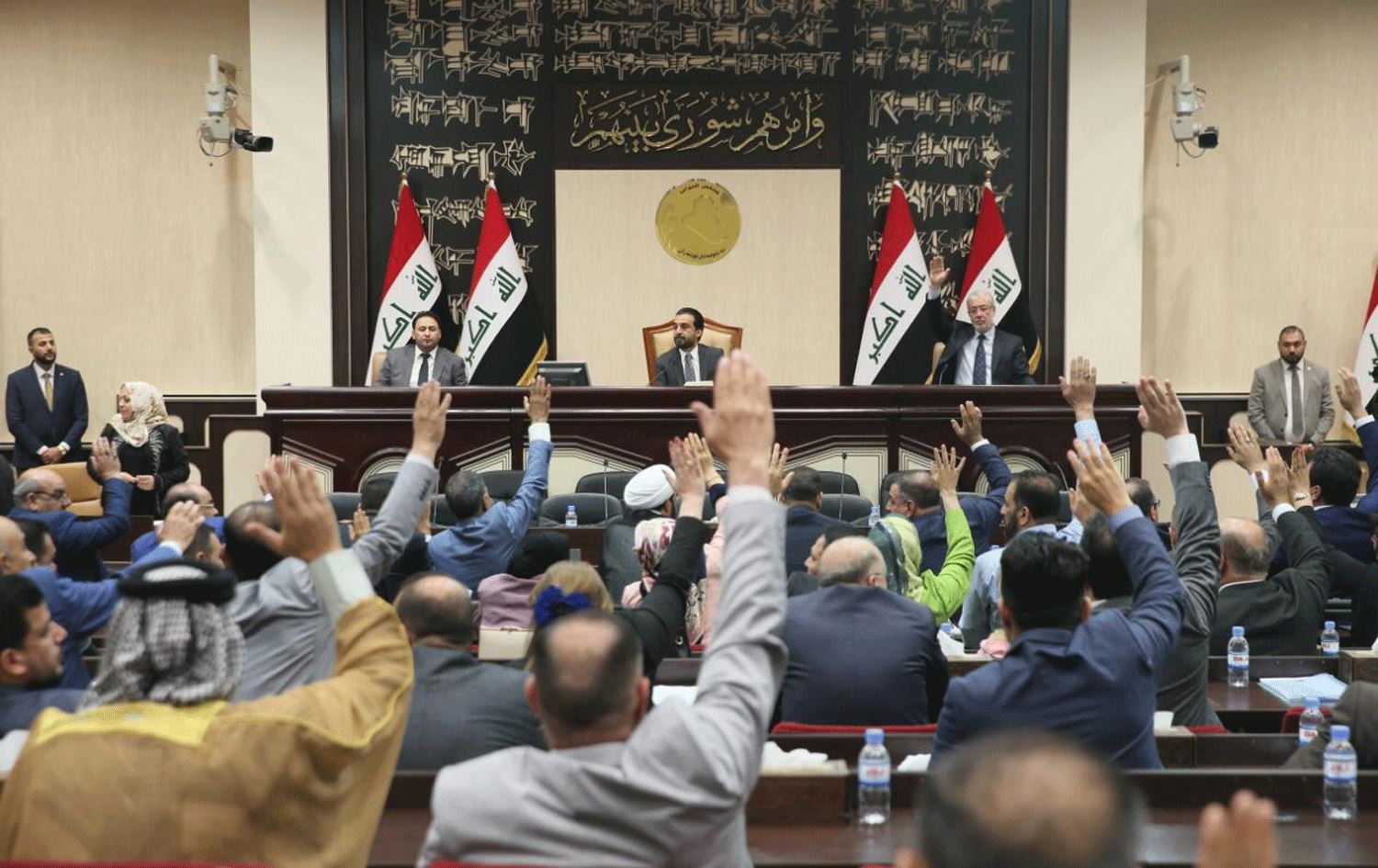 Baghdad – Mawazine News, Parliamentary sources suggested, on Wednesday, the attendance of 200 deputies of the session giving confidence to the government booth to designate Mustafa Al-Kazemi.
 The government’s official media revealed today, Wednesday, that Prime Minister-designate Mustafa Al-Kazimi obtained the “green light” from the Shiite forces to proceed with presenting his government program and present his cabinet in Parliament.
 Shafaq News / The Iraqi Federal Government and the Kurdistan Regional Government are close to turning the page on their differences over the oil file, which is one of the outstanding issues for many years, but both sides are heading to conclude a new agreement to invest gas in fields in the region.
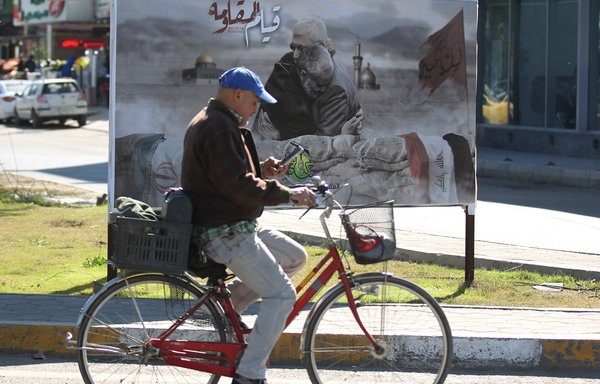 In the months since top Iranian general Qassem Soleimani was killed, Iraqi politicians and analysts tell Diyaruna, they have observed a number of political and security changes that they view as positive for Iraq.
 [Baghdad-Ain] In charge of steady steps towards completing the ministerial cabinet as quickly as possible, Prime Minister-designate Mustafa al-Kazimi is progressing, amid aid provided by all political blocs to complete what they agreed to agree to accomplish his mission.