
Exclusive: Behind the scenes of “Operation Dawn” from Washington: Al-Zaidi gave the leaders a choice: money or arrest
 The broad anti-corruption campaign launched by Iraqi Prime Minister Ali Faleh al-Zaidi has garnered attention and welcome within political and security circles in Washington, amid assessments that this step could strengthen his position ahead of his anticipated visit to the White House, if it succeeds in translating reform slogans into sustainable measures.
Al-Zaidi is preparing to visit Washington in mid-July to meet with US President Donald Trump at the White House, according to a joint statement issued earlier this month by the Prime Minister and US Special Presidential Envoy Tom Barrack.
A wave of arrests began at dawn on Sunday, targeting political officials, members of parliament, and businessmen as part of an anti-corruption campaign, which Al-Zaydi described during a cabinet meeting as the “first phase” of broader measures to recover public funds, while tasking oversight bodies with receiving any indications related to cases of corruption or negligence in state institutions.
In this context, Paul Davis, a professor of cybersecurity at the Institute for Global Policy and a former official at the U.S. Defense Intelligence Agency, said that the recent wave of arrests represents “a step that the United States and the international community have been waiting for for years.”
Davis, who previously oversaw political and military analysis files on Iraq, Iran, and Syria at the US Department of Defense, explained to Shafaq News Agency that corruption has been for decades one of the most prominent obstacles hindering the development of the relationship between Baghdad and Washington, as well as being a major factor in weakening Iraqi state institutions.
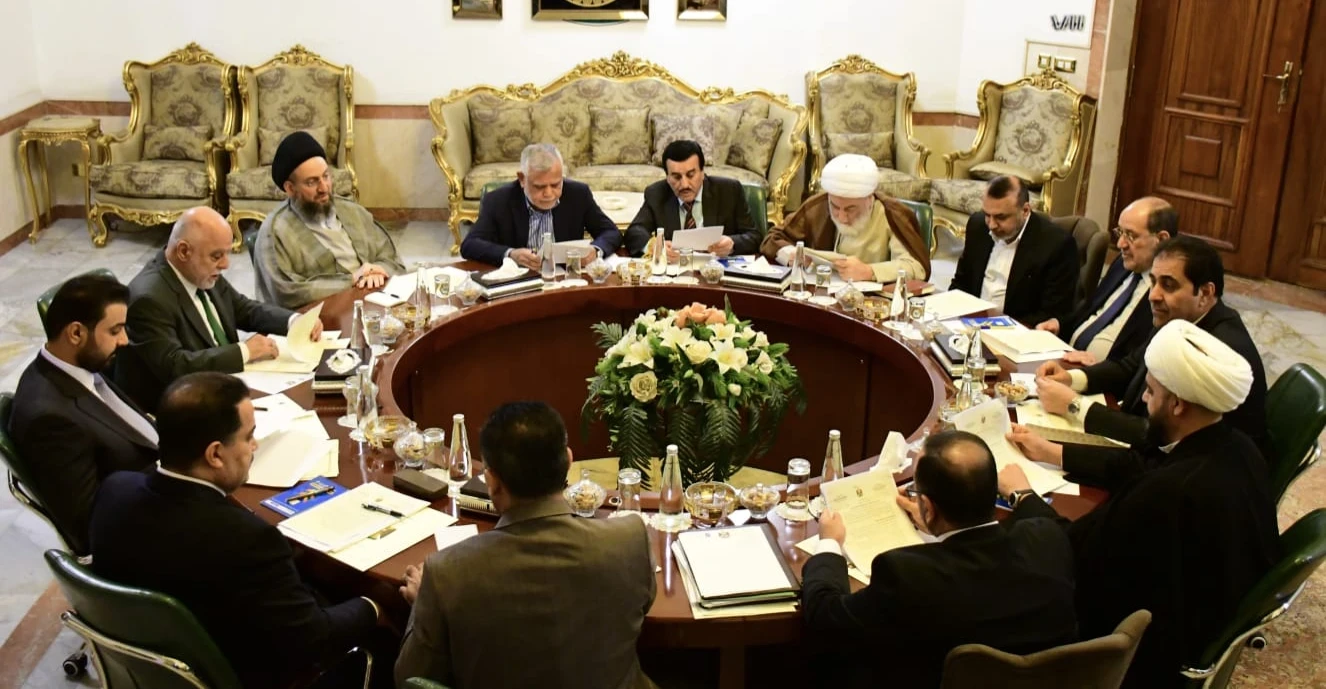
The American expert revealed behind-the-scenes details that preceded the implementation of the campaign, indicating that Prime Minister Ali al-Zaidi held a crucial meeting with Iraqi political leaders, during which he informed them of the necessity to return the funds suspected of being seized, warning that failure to do so would lead to the issuance of arrest warrants against those involved.
He added that the recent moves reflect al-Zaidi’s commitment to the promises he made since taking over the premiership, noting that Washington views these measures as a practical test of the Iraqi government’s ability to enforce the rule of law and restore the confidence of the international community.
Davis believed that the campaign would have mixed results both domestically and internationally. On the one hand, it would raise al-Zaidi’s political and diplomatic standing during his upcoming meetings with American officials, as an indication of his government’s seriousness in combating corruption. On the other hand, it might open the door to an internal political crisis, because a number of those targeted occupy influential positions within the political class and the Iraqi parliament.
He noted that decision-making circles in Washington, despite their clear welcome of the campaign, will closely monitor its developments, not only in terms of the number of arrests, but also through its ability to continue and reach judicial rulings and recover public funds, away from selectivity or political pressure.
Davis concluded by saying that the success of the campaign would give al-Zaidi’s government political momentum at home and boost the confidence of the United States and Iraq’s international partners in its ability to implement real reforms, while its failure would revive old doubts about the Iraqi state’s ability to confront powerful corruption networks.
Shafaq.com
 A security source in Anbar province revealed on Monday that a large American convoy carrying military equipment moved from Jordan towards the Al-Suqur checkpoint in Fallujah, heading towards Baghdad.
 MP Kamel Anid, from the Reconstruction and Development Coalition, confirmed today, Monday, his coalition’s absolute support for the legal and judicial measures taken against those wanted for justice, while warning at the same time of systematic campaigns led by corrupt individuals to confuse matters and mislead public opinion.
 The director of the Iraqi Media Center in Washington, Nizar Haider, revealed on Monday that the arrest warrants for the head of the Progress Alliance, Mohammed al-Halbousi, and former Prime Minister Mohammed Shia al-Sudani remain in effect and will be executed within the next few days on charges related to corruption and money laundering.
 Prime Minister Ali Al-Zidi confirmed on Monday that the salaries of state employees are secure and regular, while renewing his pledge not to receive a salary or accept any gift, and announced proceeding with the establishment of an energy and development fund.
 The Ministerial Council for Economy issued today, Monday (June 29, 2026), a number of decisions aimed at regulating the work of border crossings and unifying customs and tax procedures between the federal government and the Kurdistan Regional Government, in order to enhance revenue management and reduce unofficial crossings.
 Oil expert Hamza Al-Jawahiri warned on Monday against the government’s move to establish oil export projects via pipelines passing outside Iraqi territory, describing these steps as facing “serious political and economic challenges” in light of the country’s current situation.
 Economic expert Abdul Rahman Al-Mashhadani warned of the dangers of any move by Iraq to leave OPEC, explaining that Iraq lacks many of the necessary elements to enable it to withdraw from the organization.
 MP Karim Aliwi, from the Badr parliamentary bloc, affirmed on Monday that the legal procedures and recent arrests of suspects in the Adnan al-Jumaili case will not have any negative or obstructive impact on efforts to complete the remaining cabinet positions. He emphasized the overwhelming political and parliamentary desire to resolve this issue and vote on the vacant ministries in the near future.
 MP Mohammed Hadi affirmed on Monday that the primary reason for the country’s collapse is the rampant corruption within all state institutions.