An oil agreement paves the way for announcing a comprehensive budget in the coming days

An oil agreement paves the way for announcing a comprehensive budget in the coming days

Information/Baghdad… A member of the Kurdistan Democratic Party, Wafaa Muhammad Karim, revealed today, Monday, that there is a presence to deliver Kurdistan’s oil to Baghdad to proceed with an oil agreement within the terms of the 2023 budget, while he indicated that there are more than 30 illegal outlets for oil smuggling in the region.

Karim said in a televised interview, followed by the information agency, that “the delegation of the Kurdistan region, for the first time, participated in writing the draft general financial budget in coordination with the federal government in Baghdad.”

He added, “The salaries of employees in Kurdistan will be paid from the 14% share of the budget for the region for the year 2023.”

Karim pointed out that “more than 30 illegal outlets are used by the owners of al-Qaqjaq to smuggle oil in the Kurdistan region.”

Yesterday, Sunday, the representative of the State of Law coalition, Ahmed Al-Watifi, confirmed in a statement to Al-Maalouma that the governments of Baghdad and Erbil have reached an integrated road map to resolve the crises, indicating that parliamentary consensus exists and is awaiting the budget to be passed.

Almaalomah.me

Posted in Uncategorized | Comments Off on An oil agreement paves the way for announcing a comprehensive budget in the coming days

Finance directed to increase the number of outlets selling dollars at the official rate

Finance directed to increase the number of outlets selling dollars at the official rate

Information / Baghdad… Finance Minister Taif Sami directed, on Monday, to increase the number of outlets selling dollars to citizens at the official rate.

Sami said, in a statement received by Al-Maaloumah, that “projects to modernize banking systems must be completed and advanced methods adopted to raise the level of services for the two banks, especially with regard to point-of-sale systems and the facilities that the Ministry of Finance is working to provide within the framework of generalizing the new experience as one of the pillars.” fundamentals of modern banking systems.

And she emphasized “to secure all the requirements for completing the stages of the comprehensive banking system project in agreement with the executing company (Ernst & Young) in terms of securing databases and servers, in addition to agreeing on a contract for maintenance, operation, training and all procedures to ensure the success of the project,” noting “the importance of completing the conditions for adopting the system Modernizing the IFMIS public financial management with the two banks, which in turn will provide a secure and integrated information environment for financial management operations in a way that allows safe transmission of information between ministries, government departments, banks and financial institutions.

And Sami directed to “increase the number of outlets selling US dollars to citizens at the official rate fixed by the Central Bank, through branches spread in Baghdad and the provinces, to ensure smooth access to foreign currency and reduce the momentum and delays resulting therefrom.”

Almaalomah.me

Posted in Uncategorized | Comments Off on Finance directed to increase the number of outlets selling dollars at the official rate

The Central Bank is discussing with “Visa” the expansion of the use of digital technologies in the banking sector

The Central Bank is discussing with “Visa” the expansion of the use of digital technologies in the banking sector

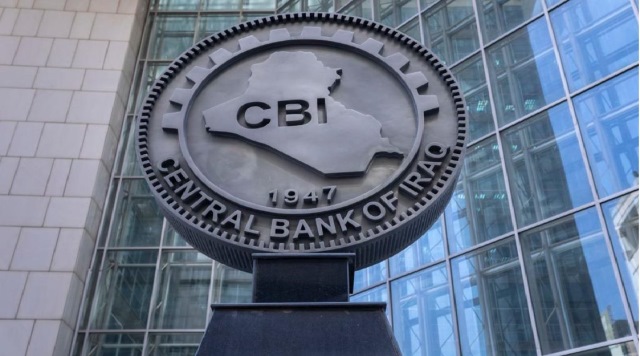
The Central Bank is discussing with Visa the expansion of the use of digital technologies in the banking sectorInformation / Baghdad… The Governor of the Central Bank of Iraq, Ali Mohsen Ismail, discussed, on Monday, with the regional head of the global “Visa” company, Andrew Tory, the expansion of the use of digitization in the banking sector.

According to a statement by the Central Bank, received by Al-Maalouma, “the meeting discussed the support provided by Visa to regulate the market and increase the acceptance of electronic collection, in support of the government’s directions and the decisions it took in activating electronic payment through the use of technology provided by the company, as well as improving special regulations and instructions.” digital financial services.

Ismail stressed, “The Central Bank of Iraq is supportive in its steps to expand the use of the latest digital technologies in the banking sector and to enhance financial inclusion in Iraq.”

He added, “The Central Bank of Iraq seeks to make a quantum leap in the field of financial technology in the Iraqi banking sector by keeping pace with the latest international technologies.”

Almaalomah.me

Posted in Uncategorized | Comments Off on The Central Bank is discussing with “Visa” the expansion of the use of digital technologies in the banking sector

Central Bank obliges all banks to work on the electronic platform to obtain dollars

Central Bank obliges all banks to work on the electronic platform to obtain dollars

Central Bank obliges all banks to work on the electronic platform to obtain dollarsShafaq News / The Central Bank of Iraq obliged, on Sunday, to directives to licensed banks, exchange companies, and mediation companies to buy and sell foreign currency, to apply through the electronic platform to obtain their determined share of the foreign currency, the “dollar”.

According to a document issued by the Iraqi Central Bank, seen by Shafaq News Agency; It stated, “The electronic platform for the cash sale of foreign currency (FITR) must be approved, as of Monday, corresponding to 20/2/2023.”

The document added that “the bank or company that does not use the aforementioned platform will be denied access to its weekly share of cash (dollars).”

Shafaq.com

Posted in Uncategorized | Comments Off on Central Bank obliges all banks to work on the electronic platform to obtain dollars

Al-Sudani’s advisor: Iraq has maintained a stable credit rating over the last 8 years

Al-Sudani’s advisor: Iraq has maintained a stable credit rating over the last 8 years

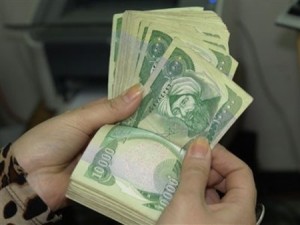
10k Iraqi Dinar notesBaghdad – Mawazine News, the financial advisor to the Prime Minister, Mazhar Muhammad Salih, confirmed, on Monday, that Iraq has maintained a stable credit rating during the last eight years, indicating that Iraq has a rating that includes countries, the majority of which are emerging economies.

Salih said, “The credit rating of Iraq has been adopted since 2015 in our country, which led to a reduction in the cost of external borrowing by 50%, when Iraq issued the European bond called (the Euphrates), which Iraq borrowed at the time from the international capital market by about one billion dollars, in circulation.” Currently on European secondary markets.

He pointed out, “There is a (Tigris) bond guaranteed by the United States government in the amount of one billion dollars as well, as well as a European bond for Iraq under the name (Iraq / 2028), which is related to the settlement of foreign private sector debts according to the settlement of the Paris Club agreement, with an issue amount of about $ 2.7 billion.” .

In an interview with the official news agency, Salih said, “The credit rating of Iraq depends in general, and for the aforementioned bonds, on important macroeconomic criteria primarily to achieve what is called (the creditworthiness of Iraq) and the ability of the economy to pay its debt services and external obligations without significant failure.” .

He added, “The economic capabilities are determined by the two issues of deficit or surplus in the current account of the balance of payments and the deficit or surplus in the general budget at the very least, in addition to the role of foreign reserves and their efficiency as an indicator in covering outstanding debts and their short-term services.”

He stressed, “Iraq has maintained, over the past eight years, a stable credit rating. Its indicators are issued by more than one of the international credit rating agencies, such as (Clubl Fitch) and others, on a semi-annual basis, which indicates the great capabilities of Iraq to fulfill its external obligations towards creditors and others around the world.” .

He pointed out, “The classification that Iraq enjoys today, which is in the B-level range, places Iraq among an important international group of no less than 60 countries in the world, most of which are emerging market countries and emerging economies.”

Mawazin.net

Posted in Uncategorized | Comments Off on Al-Sudani’s advisor: Iraq has maintained a stable credit rating over the last 8 years

Al-Fateh: Washington is trying to isolate Iraq externally by fabricating a dollar crisis

Al-Fateh: Washington is trying to isolate Iraq externally by fabricating a dollar crisis

Al-Fateh - Washington is trying to isolate Iraq externally by fabricating a dollar crisisInformation /Baghdad… The representative of the Al-Fateh Alliance, Karim Al-Muhammadawi, accused the US of working to isolate Iraq regionally and internationally by fabricating the dollar crisis.

Al-Muhammadawi said in a statement to Al-Maalouma, “Washington is working to obstruct any agreement between the new Iraqi government headed by Muhammad Shia’ al-Sudani with the countries of the region that have a prominent role in the international arena.”

He added, “The US administration does not allow Iraq to open up to countries such as China, Russia and Iran to preserve its economic interests in the fields of oil, energy and security.”

Al-Muhammadawi indicated, “The Washington administration wants Iraq to be subordinate to it by taking decisions that are in line with US foreign policy in the region by pressing towards the economic stranglehold against Baghdad and fabricating the dollar crisis.”

Almaalomah.me

Posted in Uncategorized | Comments Off on Al-Fateh: Washington is trying to isolate Iraq externally by fabricating a dollar crisis

Hussein… points out the differences between buying dollars and the market’s need

Hussein reveals the purpose of Washington’s visit and points out the differences between buying dollars and the market’s need

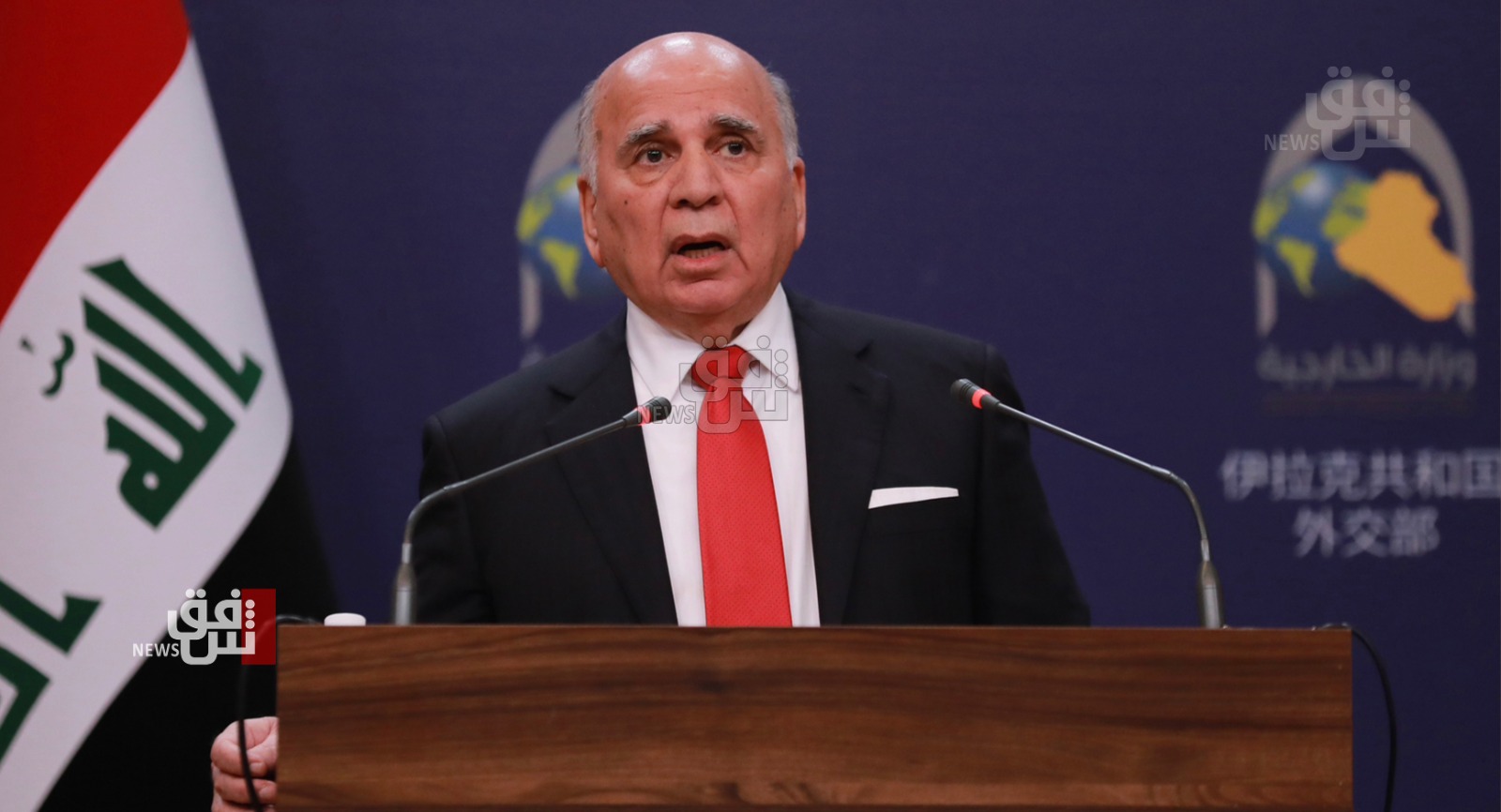
Hussein reveals the purpose of Washingtons visit and points out the differences between buying dollars and the markets needShafaq News / Foreign Minister Fouad Hussein revealed the purpose of the Iraqi delegation from its visit to the US capital, Washington, and while pointing to differences between buying the dollar and the market’s need, he stressed that the Iraqi currency is strong and the reserves exceeded 100 billion dollars.

“The Iraqi delegation that visited Washington consisted of different sectors, and the purpose of the visit to Washington was related to the economic sector,” Hussein said in a press conference attended by Shafaq News Agency.

He explained, “Monetary policy was on the agenda of the Iraqi delegation’s visit to Washington, and we discussed political issues, fighting corruption, and regional relations with the American side.”

Hussein indicated, “The Iraqi currency is strong, and the Iraqi reserves exceeded 100 billion dollars, and the financial liquidity is available.”

And the Iraqi Foreign Minister continued, “With the application of the electronic platform, it became clear that the market’s need differs from the currency that pays.”

He pointed out that “the dollar’s relationship with the dinar is in the right direction, and there will be stability for the currency. It is a matter of time. We noticed this before traveling to Washington, and with the measures taken by the Central Bank and the Prime Minister and the Istanbul meeting before the delegation’s visit to Washington, the dollar stopped climbing.”

Hussein said, “There are unreal bills that were applying to obtain dollars.”

He explained, “The issue of smuggling the dollar is not a cause but a consequence.. Through the electronic system, it is difficult to know who receives the dollar and who is the final beneficiary.”

And he indicated that “the electronic platform will help stop the smuggling of the dollar, and the platform that deals with the dollar must also be placed at airports and border crossings.”

Shafaq.com

Posted in Uncategorized | Comments Off on Hussein… points out the differences between buying dollars and the market’s need

After contacting the Minister of Finance.. Al-Mandalawi: The budget law will reach parliament early next week

After contacting the Minister of Finance.. Al-Mandalawi: The budget law will reach parliament early next week

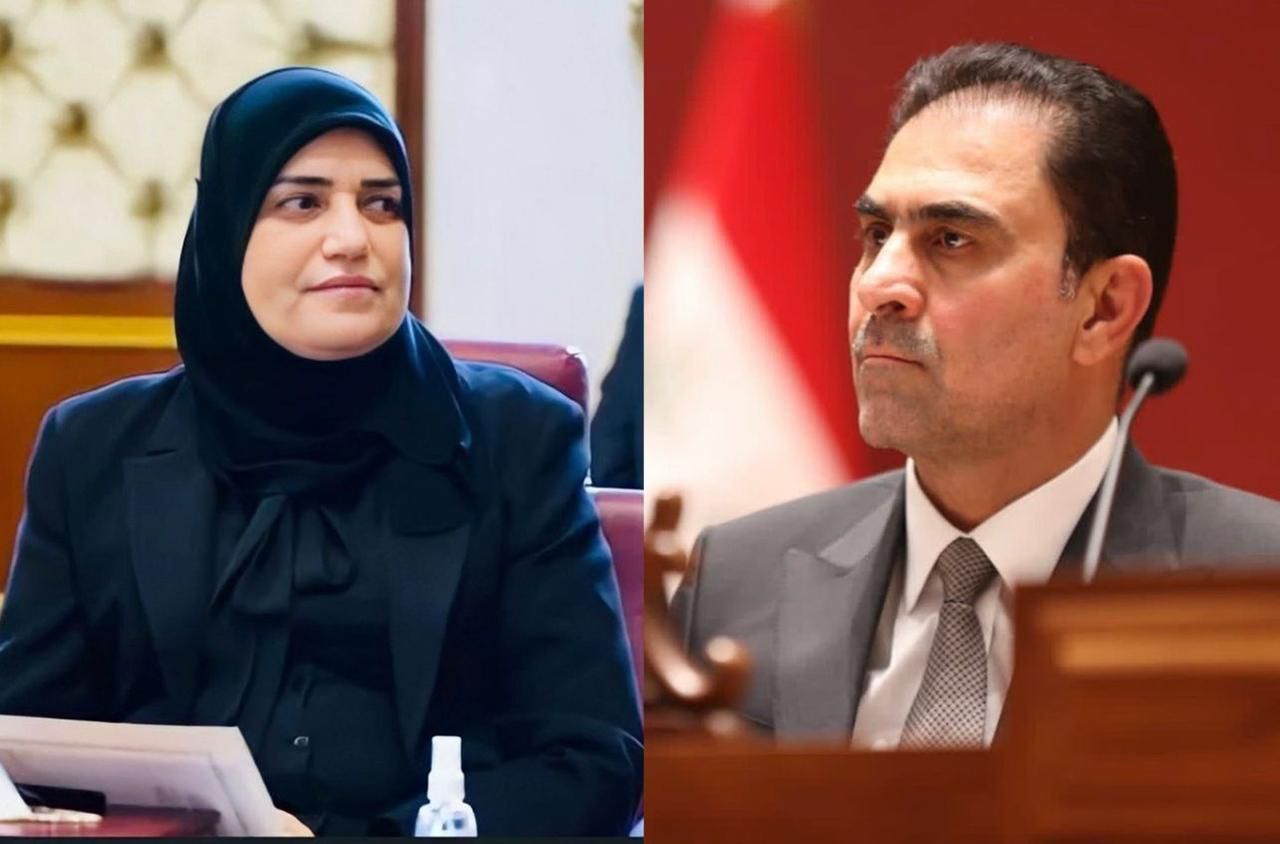
After contacting the Minister of Finance.. Al-Mandalawi - The budget law will reach parliament early next weekShafaq News / First Deputy Speaker of the Parliament, Mohsen Al-Mandalawi, announced today, Monday, that the general budget bill will reach Parliament early next week, while stressing the importance of discussing it to support the poor classes and segments, employees and the food basket.

Al-Mandalawi’s media office said in a statement received by Shafaq News agency, “First Deputy Speaker of Parliament, Mohsen Al-Mandalawi, confirmed that the draft general budget law will reach Parliament early next week, after a phone call he made with Finance Minister Taif Sami.”

Al-Mandalawi stressed “the importance of the budget bill arriving soon to the parliament and starting to discuss its items and make the necessary amendments to it by the Finance Committee, in a way that guarantees the proper application of the government curriculum, especially supporting the poor classes and segments and ensuring the continuity of providing basic materials through the food basket, as well as securing salaries.” Staff and financial allocations required for new appointments.

And the deputy of the Kurdistan Democratic Party parliamentary bloc, Vian Dakhil, revealed today, Monday, the presence of a delegation from the region in Baghdad to discuss Kurdistan’s share of the budget and the oil and gas law, while she indicated that what actually reaches the region does not exceed 5% of its share specified in the budget.

Yesterday, Sunday, the representative of the State of Law bloc, Muhammad Al-Shammari, was subject to the approval of the draft budget law for the current year by resolving the differences and outstanding issues between Erbil and Baghdad, while a delegation from the Kurdistan Regional Government visited last week the capital, Baghdad, and engaged in a round of dialogues with the ministries of finance, planning and oil, to return today. Once again, to resume discussions about the region’s share of the budget, in addition to working on enacting the oil and gas law and other issues.

It is noteworthy that the financial budget for the past year 2022 was not approved by the Council of Ministers and the House of Representatives due to the turmoil that Iraq witnessed after the early elections in October 2021, which escalated to dangerous levels that ended with the events of the Green Zone, with armed confrontations between supporters of the Sadrist movement and the security forces, which claimed lives. Dozens and hundreds injured.

After the end of the crisis, with the agreement of the political blocs to elect the President of the Republic and to grant confidence to the government of Prime Minister Muhammad Shia’a al-Sudani, the latter pledged that he would present the draft federal budget law for the year 2023 as soon as possible.

Shafaq.com

Posted in Uncategorized | Comments Off on After contacting the Minister of Finance.. Al-Mandalawi: The budget law will reach parliament early next week

Is the US tutelage imposed on the Iraqi economy?
Is the US tutelage imposed on the Iraqi economy?

Is the US tutelage imposed on the Iraqi economyIraqis and observers are following with great interest the results of the visit of the Iraqi economic delegation to the United States a few days ago, because of its decisive effects on the economic and living conditions of the country, present and in the future, in light of the repercussions of the American-Iranian conflict on the Iraqi arena and the region.

In an attempt to persuade the American administration to ease restrictions on the movement of the dollar that it imposed on Iraq recently to limit massive transfers of Iraqi funds to Iran and some neighboring countries, the Baghdad government sent an economic delegation to Washington that included Foreign Minister Fuad Hussein, the Governor of the Central Bank of Iraq, Ali Al-Alaq, senior economists and finance experts, and representatives Some ministries, where the visit raised divergent opinions between the Iraqi delegation’s claim of the success of its mission, and the indications of the failure of the visit and the US imposing its conditions on Iraq.

Failure indicators

Many indicators confirmed the difficulty of the economic delegation’s task in persuading Washington to ease its restrictions imposed on the movement of the Iraqi dollar to limit its flow towards Iran and its allies, as part of the United States’ efforts to control the Iraqi economy by linking it to it and its allies and keeping it away from Iranian influence.
In what appears to be an acknowledgment by the Baghdad government that the US position cannot be changed, the Prime Minister, Muhammad Shia’ al-Sudani, described the attempt to impede the wheel of the economy and return to smuggling and violating the laws as a “losing bet.” Al-Sudani stressed that “the wheel of economic reform is moving forward” and that “whoever bets on going backwards, practicing smuggling, and violating laws and instructions, is a losing bet. ».

This statement coincided with a massive campaign launched by the security authorities against banking companies and banks that buy dollars from the market and smuggle them abroad, where it was announced that many of those involved in this matter were arrested, to limit Iraqi banking companies buying dollars from the market to smuggle it or manipulate its exchange rate. And this came in the wake of the US Federal Reserve’s recent decision to place restrictions on illegal transfers of billions of dollars from Iraq to other countries, which Washington considered a breach of the international sanctions imposed on Iran and its allies.

Iraqi Foreign Minister Fuad Hussein, who met in Washington with US Secretary of State Anthony Blinken, announced that the Iraqi delegation called on the Americans to implement the provisions of the strategic agreement signed by Iraq and the United States in 2011. The Iraqi delegation held numerous meetings with American financial decision makers and the World Bank, in order to convince them of the safety of The Iraqi government’s measures to curb currency smuggling, which is not an easy task in light of the Baghdad governments’ silence on the widespread smuggling of dollars to Iran since 2003. The meetings also discussed the economic situation in Iraq, the problem of banks, the exchange rate of the dollar, the production of gas, oil, electricity, and others.

In order to reassure the American side of the efforts of the Baghdad government to move away from dependence on Iranian oil and gas, Fuad Hussein affirmed, “We are working to achieve independence in the field of energy,” claiming that “Iraq cannot be an oil and gas state and does not have electricity,” stressing that the Iraqi government I recently decided to activate the agreements concluded with various companies to extract gas from the fields, and that agreements will also be concluded with other companies to invest in the field of gas associated with oil, as Iraq is the second country in the world in wasting gas.

US focus on Iraq’s economy

As for US Secretary of State Anthony Blinken, he stressed in his speech during the press conference with the Iraqi Foreign Minister, “that his country is working to strengthen the Iraqi economy and reintegrate it into the region within the framework of the strategic relations that link the two countries,” explaining, “We are now focusing very intensively on the economic dimension of that agreement.”

In stressing Iraq’s distance from dependence on Iranian oil and gas, Blinken said: “There will be a special focus on energy and electricity in the strategic framework agreement,” stressing that Iraq “can and must be independent in the field of energy.” It is a reference to the American rejection of the Baghdad government’s dependence on Iranian oil and gas, in conjunction with the deliberate waste of Iraqi gas and the rejection of calls for its investment by local and international companies.

It was noted that Blinken did not address in his statements the main issue related to the movement of the dollar in Iraq, which indicates that the US administration did not change its restrictions and did not respond to the Iraqi demands. Informed sources confirmed that the American position was strict on the need for Iraq to reconsider its banking system, which has large loopholes that allow the smuggling of Iraqi funds to Iran and help it break the blockade and sanctions against it. Washington also revealed that it closely monitors money laundering and currency smuggling in Iraq, and therefore warned Baghdad of the need to control the movement of its dollar, otherwise the Iraqi dinar will be doomed to collapse, as happened with the Syrian and Lebanese pounds.

The joint statement of the two countries stated that they had decided to “accelerate efforts to exploit the burning gas, modernize the infrastructure for natural gas distribution, regional connectivity to the Iraqi electricity network, modernize the electricity infrastructure in Iraq, and explore renewable energy opportunities.” The American delegation praised “Iraq’s commitment to regional electrical interconnection projects with Jordan and Saudi Arabia» They also urged the use of solar energy. The two delegations affirmed “the convergence of views that pursuing an ambitious agenda for energy independence is necessary to achieve maximum economic prosperity for Iraq and protect its sovereignty.”

While the Governor of the Central Bank, Ali Al-Alaq, affirmed the bank’s intention to launch the second package of measures that would enhance the stability of the dollar exchange rate, stressing that “the new electronic platform to avoid the imposition of any penalties on the parties that carry out transfer operations, whether they are banks or others, as it is a protection for the banking sector and the bank.” The Central Bank and the banks from falling into any forms related to foreign financial transfers, and this serves all parties.

Iraqi economic analysts indicated that the US Federal Bank gave Iraq a short period of time to commit to monitoring the movement of its funds, in accordance with international standards, and to avoid money laundering and informal transfers.

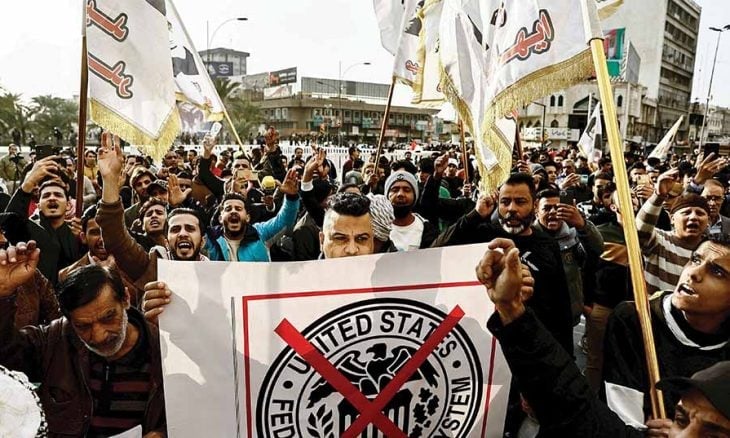
Samir Obaid, an academic and expert in political and strategic affairs, revealed, in a series of tweets on his personal page on Twitter, “Washington imposed a number of conditions on Iraq in order to overcome the dollar crisis and smuggle it abroad, and that among the American conditions signed by the Iraqi delegation in Washington is the opening of a federal office in Amman.” His mission is to monitor the movement of Iraqi funds ». He revealed that “Al-Sudani broke the barrier of hesitation and courtesy with the framework leaders (Iran’s allies) and informed them of the strict American conditions signed by the Iraqi delegation in Washington, which have become binding,” he said, which he considered “the imposition of American tutelage on the Iraqi economy by signing them in Washington.”

Shiite criticism

Perhaps the most prominent indicator of the failure of the Iraqi delegation to change the American position is the angry reactions of the forces of the coordination framework allied to Iran, which expressed dissatisfaction with the results of the foreign minister’s move in Washington and pledged to send Prime Minister Muhammad al-Sudani to Washington for this purpose.

The forces of the framework directed various accusations against the United States, at times of seeking to control Iraq and its economy, with calls to get rid of the American financial hegemony over Iraq. In addition to calls for the Sudanese government to sell oil to India, China and other countries, in currencies other than the dollar, away from the US financial system that controls the world economy. While some framework sources stated that Washington took the oil export agreement to Jordan through the (Basra-Aqaba) pipeline as one of the conditions for resolving the dollar crisis, others claimed that the Russian-Chinese-French move towards Iraq recently prompted Washington to impose restrictions to put pressure on the Iraqi government economically.

Away from intentions and goals, observers see that the American measures are welcomed by most Iraqis, as they are beneficial to their country and limit the drain of Iraq’s funds by other countries. They also see that the decisions of the US Federal Bank are systematic and deliberate to direct the Iraqi economy and prevent its exploitation by Iran and its allies. As for the Baghdad government, which has fallen between the American rock and the Iranian anvil, it has no choice but to abide by the American restrictions, despite the pressure exerted on it by the Iraqi loyalist forces, which reflects Iran’s unwillingness to abandon the Iraqi milking cow, amid anticipation of the next Iranian steps to circumvent the American decisions.

Rawabetcenter.com
Posted in Uncategorized | Comments Off on Is the US tutelage imposed on the Iraqi economy?

The battle between al-Maliki and al-Halbousi explodes the alliance of sovereignty

The battle between al-Maliki and al-Halbousi explodes the alliance of sovereignty

The battle between al-Maliki and al-Halbousi explodes the alliance of sovereigntyThe war of settling scores waged by the leader of the State of Law bloc, Nuri al-Maliki, against Speaker of Parliament Muhammad al-Halbousi is approaching its end after the collapse of the Sovereignty Alliance that brings together the Taqaddam Party led by al-Halbousi and the Azm Alliance headed by Khamis al-Khanjar, and the withdrawal of five deputies from the Taqaddam Party.

At that time, one of the first things that Al-Suleiman said in the attack on Al-Halbousi was that “after Anbar suffered from projects of extremism and terrorism and turned into a stage of domination, dictatorship, silencing mouths and corruption, we announce to them from Baghdad that these actions will be met with a reaction that the owners of the projects of normalization and division and those who stole rights would not expect.” component, and whoever claims leadership must understand that this is the last chance.”

And the leader of the Progressive Party, Representative Haibat al-Halbousi, announced the imminent end of the Sovereignty Coalition, due to the coalition partners’ non-compliance with national covenants and constants, referring to the Coalition of Resolve, adding that “the reasons behind the near end of the Sovereignty Coalition are the primacy of the personal interests of most of the political partners in the coalition.” The coalition, and the deviation of many of them from political agreements, in addition to attempts to split the political ranks, whether in the House of Representatives or in the provinces that we represent.

Maliki loyalists and opponents of al-Halbousi say that monopolizing power and making decisions without returning to the rest of the political parties or belonging to one party and allied together are the most prominent reasons that prompted some parties within the Sovereignty Alliance to leave this alliance and announce their defection from it.

The deputies who decided to break with Al-Halbousi’s leadership from the Taqaddam party are Falah Al-Zaidan, Latif Al-Warshan, Adel Al-Mahlawi, and Youssef Al-Sabawi.

Along with the emir of the Dulaim tribes, Sheikh Abu Risha emerged as one of the new opponents of Al-Halbusi, as he considered that Anbar was “enslaved” by him

The crisis began in the Sovereignty Coalition after MP Raad al-Dahlaki withdrew from the coalition, and Laith al-Dulaimi “accepted the resignation” of the membership of the House of Representatives, amid accusations of the Speaker of Parliament abusing his position to target his critics.

While the coalition announced that “the departure of any deputy, member, or cadre from among the ranks of its two parties in Taqadum or the Arab Project, is a definitive departure from the ranks of the coalition,” however, the leader of Azm Mishaan al-Jubouri coalition said that this statement does not express sovereignty, Because it is issued only by Al-Halbousi and not by Al-Khanjar, and he is the only one authorized to make decisions according to his internal system approved by the Commission. Al-Jubouri accused Al-Halbousi of kidnapping the Sunni component and turning it into a means of gains for himself and those around him.

“The defections that always occur, whether at the level of sovereignty or political blocs, for many deputies come because of the uniqueness of the head of the bloc in decisions and positions,” said the representative of the State of Law, Muhammad al-Saihoud. He added, “Al-Halbousi works with well-known regional agendas that do not serve the interests of Iraq, as it has become better to remove him from office and nominate another alternative figure for him to head Parliament, especially since there is a rejection by the Sunni house of the continuation of this figure in power.”

Al-Maliki seeks, by liquidating the influence of Al-Halbousi, to remove him as the leader of the Sunni bloc, in favor of fragmentations distributed between tribal alliances, small competing parties, and opposing and warring personalities among themselves, but their survival can be guaranteed alongside the coordination framework, of which Al-Maliki is the most prominent leader.

Al-Halbousi’s alliance with Muqtada al-Sadr was the turning point that prompted al-Maliki to decide to seek his removal from the Sunni political map, just as Osama al-Nujaifi, Speaker of Parliament, was removed between 2010 and 2014.

As for al-Maliki himself, he had previously considered the Taqaddam Party a face of the Baath Party. And he was heard in the famous audio leak of him saying that “the Shiites are in danger, because the Baathists have now risen to dangerous ranks, entered the core of the state, and established parties under the title ‘Progress’, which is led by Muhammad al-Halbousi, an old party, established by one of the personalities, but he died Al-Halbousi received it after him.

Al-Halbousi, for his part, tried to win over some of his opponents. He succeeded in sponsoring a tribal reconciliation between the Emir of the Dulaim tribes and the head of the Awakening Conference in Anbar Province.

However, this attempt did not escape criticism, as the leader of the Azm coalition, Faisal Al-Shawka, said that Al-Halbousi is trying to win over tribal sheikhs by distributing positions, while Anbar province suffers from marginalization and lack of services and infrastructure due to the Al-Halbousi party’s mismanagement of the city.

Observers say that the war against al-Halbousi is not limited to personal revenge for a situation that almost threatens the survival of the coordination framework, but also aims to fragment the Sunni component to ensure that it remains weak and so that it is possible to win over some of its parties and not others.

And they add that with the disintegration of the sovereignty alliance and the emergence of new competitors, the ground on which al-Halbousi stands becomes in a state of cracks, which makes him weak even if he succeeds in remaining as a secondary party among other Sunni parties.

Rawabetcenter.com

Posted in Uncategorized | Comments Off on The battle between al-Maliki and al-Halbousi explodes the alliance of sovereignty