
US challenge to White House invitation of Iraqi PM
Washington, D.C — In a letter to President Joe Biden, a group of republican U.S. Senators and Members of Congress have communicated their concern regarding the administration’s invitation to Iraqi Prime Minister Mohammed Shia al-Sudani. The signatories expressed “deep concern with your invitation to host Iraqi Prime Minister Mohammed Shia al-Sudani to the White House in April.”
The letter alleges that hosting Prime Minister al-Sudani “amplifies the message of your ongoing campaign to undermine Israeli Prime Minister Netanyahu,” and accuses the administration of preferring to “appease Iran, not supporting our allies.”
Addressing the influence of Iran, the legislators assert, “The Iraqi government remains under significant Iranian influence,” and criticize U.S. monetary policies, saying, “You continue granting sanctions waivers to the Iraqi government to import electricity and natural gas, all while using U.S. dollars transferred to Iraq from the Federal Reserve.”
The letter is signed by Senators Tom Cotton, Ted Budd, Bill Hagerty, and Rick Scott, as well as Representatives Jake Ellzey, French Hill, Michael R. Turner, and Michael Waltz,
The group criticizes the administration’s imbalance in its Iraqi relationships, “And while you invite the Iraqi Prime Minister to visit Washington, you have refused to meet with Kurdistan Prime Minister Masrour Barzani, a critical partner and the host of the most U.S. forces in the region.”
The letter concludes with a series of demands aimed at reducing Iranian influence and reinforcing U.S. interests in the Middle East, including, “You should focus on reducing Iranian influence in Iraq and shoring up support for our partners in Kurdistan. As a precondition of any visit by Prime Minister al-Sudani, you should require the immediate reopening of the Iraq-Turkey Pipeline.”
The signatories emphasize the urgency of their recommendations by stating, “Your appeasement of Iran has endangered American national security and weakened our relationship with our allies. While the corrective actions outlined here will not undo the damage you’ve caused, they represent an important first step.”
964media.com
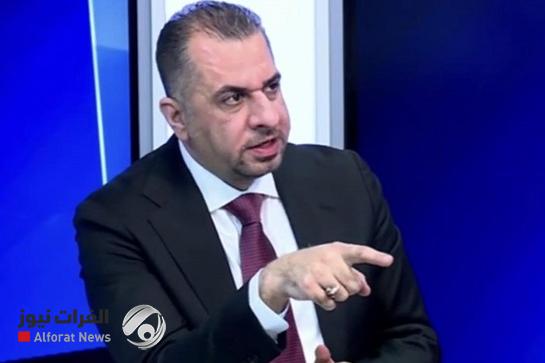 The political advisor to the Prime Minister, Fadi Al-Shammari, revealed the most prominent files that will be discussed in the visit of Prime Minister Muhammad Shia Al-Sudani scheduled to Washington in the middle of next month, pointing to “the strong relationship between Al-Sudani and the leaders of the coordination framework.”
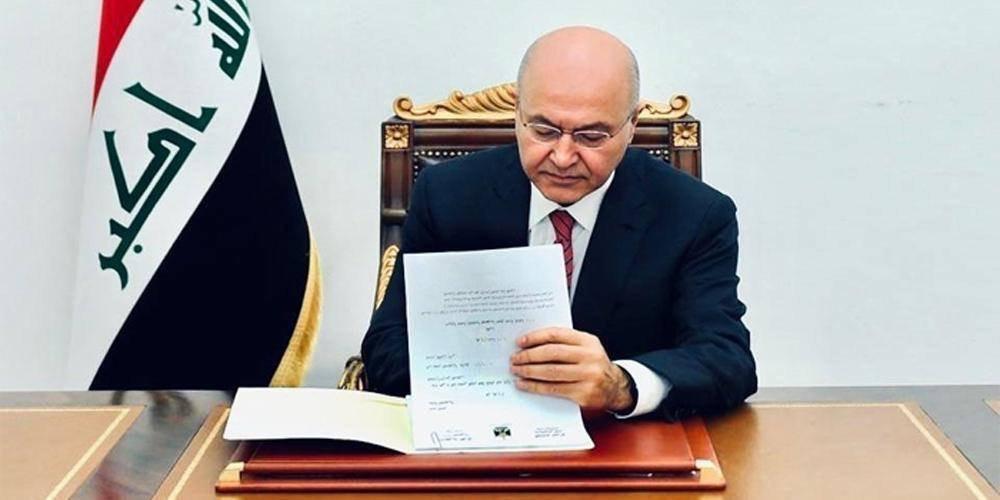 Shafaq News / The Harvard Crimson website, affiliated with Harvard Kennedy School, reported that former Iraqi President Barham Salih joined the Belfer Center for Science and International Affairs and the Middle East Initiative, a center affiliated with the university, as a senior fellow.
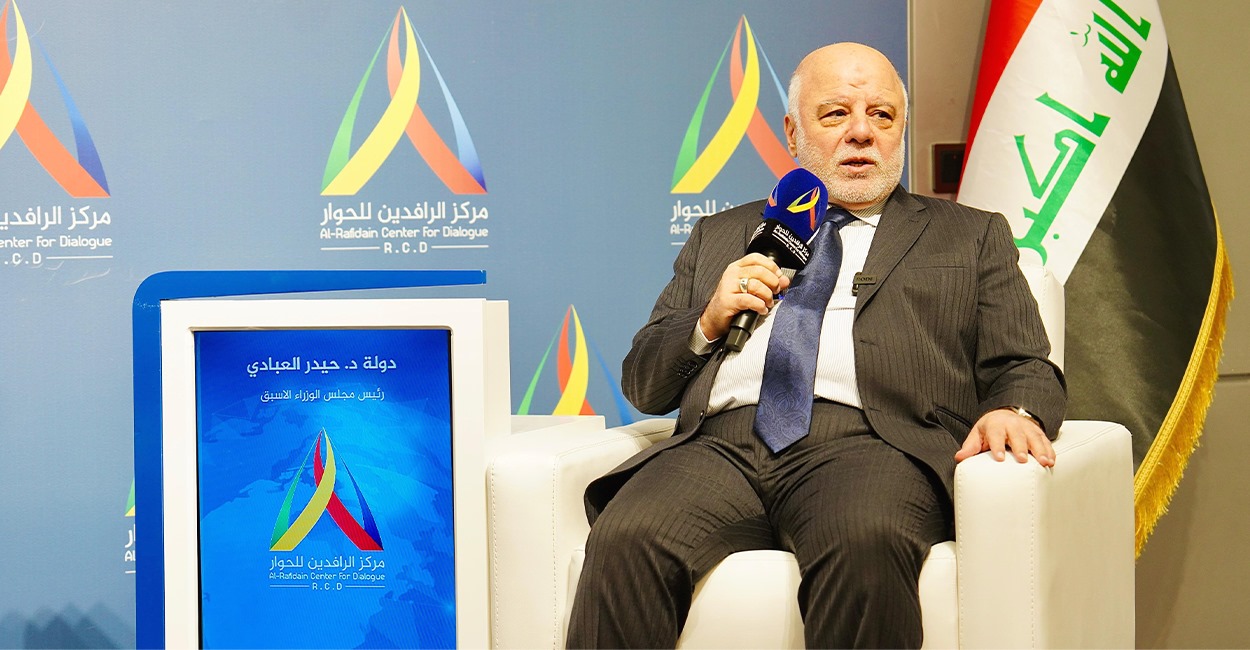 Shafaq News / Former Prime Minister, Haider al-Abadi, confirmed on Tuesday his support for renewing the mandate of Prime Minister Muhammad Shia al-Sudani and his government to give them the opportunity to achieve government reform, while pointing out that the leader of the Sadrist movement, Muqtada al-Sadr, did not leave the political process, but rather left the ball in the court of the coordination framework.