Iraq is implementing comprehensive banking reforms in cooperation with the Central Bank and international consulting firms.
 The Iraqi economy is one of the most oil-dependent in the world, with oil accounting for more than 90% of government revenues and exports. This makes Iraq’s economic stability highly dependent on fluctuations in global oil prices.
Although Iraq has vast natural resources, decades of conflict, corruption, and weak governance have hampered its economic development. However, the Iraqi government, in collaboration with the Central Bank of Iraq and the International Monetary Fund (IMF), has begun implementing important reforms aimed at modernizing the banking system, enhancing transparency, and diversifying sources of income. These changes will have a significant impact on the future and stability of the Iraqi economy.
1. Oil dependence and economic fragility
The oil sector remains the backbone of the Iraqi economy, providing nearly all government revenue. When oil prices rise, the economy experiences rapid growth, but when they decline, budget deficits emerge, salaries are delayed, and investments in sectors such as health and education are reduced.
For example, the International Monetary Fund (IMF) (2025) reported that non-oil growth fell to about 2.5% in 2024 due to the volatility of oil revenues, demonstrating how deeply the Iraqi economy is intertwined with the oil sector. This heavy dependence creates a “boom and bust” cycle that impacts long-term planning, job opportunities, and social stability.
Effects:
Over-reliance on oil limits economic diversification.
Volatility in oil prices leads to instability in public services and salaries.
Weak investment in non-oil sectors such as agriculture and industry.
2. The role of banking and financial reforms
In 2025, the Iraqi government launched a comprehensive banking sector reform program in collaboration with international firms such as KPMG, Ernst & Young (EY), and the International Finance Corporation (IFC).
These reforms aim to modernize the banking system, increase transparency, and attract foreign investment. The Central Bank of Iraq is also working with the United Nations Development Programme (UNDP) to develop the digital economy and regulate e-commerce.
According to Iraq Business News (October 2025), Prime Minister Mohammed Shia al-Sudani emphasized that reforming the banking sector is a fundamental pillar for building confidence and boosting economic activity.
Effects:
Improving banking standards will make it easier for small and medium-sized enterprises to access financing.
Enhancing transparency will reduce financial and administrative corruption.
The shift to e-services will support modern commerce and entrepreneurship.
If these reforms succeed, Iraq will transform from a traditional cash economy to a more modern one based on technology and institutional trust.
3. Unemployment and weak private sector
Unemployment is one of Iraq’s most prominent economic and social challenges, especially among youth and women. A large number of citizens rely on government employment, while the private sector suffers from weak infrastructure, financing, and investment.
The IMF report (2025) indicates that improving labor market policies and financing could raise employment rates by about 2.5% over five years. To achieve this, Iraq needs to support entrepreneurship, expand vocational education, and stimulate domestic and foreign investment.
Effects:
High unemployment leads to increased poverty and social instability.
Supporting the private sector reduces dependence on government jobs.
Developing agriculture, tourism, and manufacturing industries could create thousands of new jobs.
4. Corruption and weak governance
Administrative and financial corruption and weak institutions are considered among the greatest obstacles to the development of the Iraqi economy. Both the World Bank and the International Monetary Fund (2025) emphasized that the lack of transparency and weak laws deter foreign investors and lead to the waste of public resources.
Although the government has begun implementing campaigns to combat corruption and enhance financial transparency, these efforts require greater institutional and legal support to ensure sustainability.
Effects:
Corruption widens the gap between social classes and reduces citizens’ trust in government.
Weak laws and regulations reduce investor confidence.
Improving governance will encourage international partnerships and investments.
5. The future outlook for the Iraqi economy
If Iraq continues to implement current economic reforms, the economic situation could improve significantly in the coming years. Diversifying the economy toward sectors such as renewable energy, agriculture, tourism, and digital services is expected to reduce dependence on oil.
The International Monetary Fund expects the success of structural reforms to lead to sustained GDP growth and expansion in the non-oil sectors. However, this improvement depends on political and security stability and continued cooperation with international institutions.
Potential positive effects:
Strengthening the financial system and increasing foreign investment.
Creating job opportunities for youth and women.
Improve infrastructure and promote trade.
Achieving long-term economic stability.
Potential negative impacts (if reforms fail):
Continued dependence on oil and economic volatility.
High unemployment and increased social tensions.
Weak international confidence and declining investment.
Conclusion
The Iraqi economy is going through a delicate phase combining challenges and opportunities. Although oil remains the primary source of income, ongoing reforms in the banking sector, governance, and economic diversification represent real steps toward transformation.
The greatest challenge remains transforming temporary oil wealth into long-term sustainable development. This requires transparency, investment in people, and building strong institutions that support innovation and integrity.
If Iraq succeeds in implementing these reforms and promoting economic diversification, it will be able to build a stable economy that creates jobs and improves the standard of living for future generations.
Economic Studies Unit / North America Office,
Rawabet Center for Research and Strategic Studies
Rawabetcenter.com
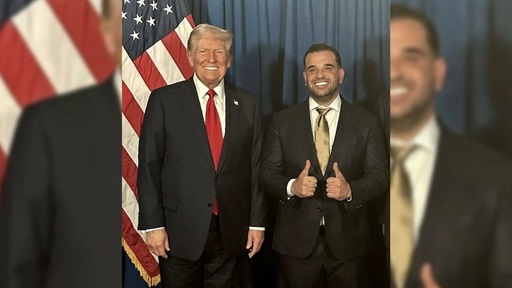 US President Donald Trump announced on Sunday the appointment of Mark Savaya as his special envoy to Iraq.
 On Saturday, the Echo Iraq Observatory revealed new instructions issued by the Central Bank to all authorized banks in the country regarding financial transfers and customs clearance procedures related to the requirements for approving special commercial invoices.
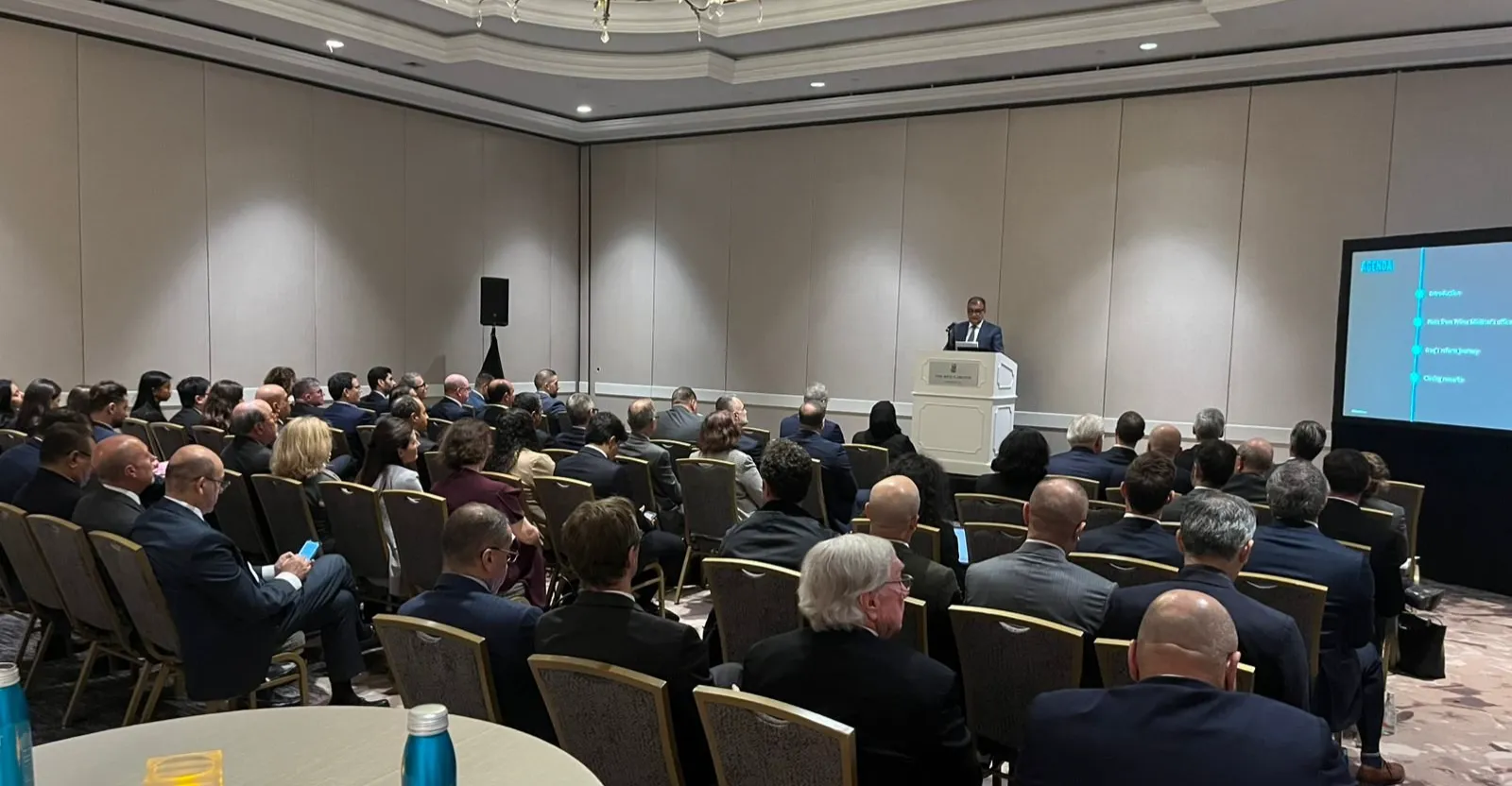 The Iraqi delegation participating in the banking reform conference in Washington, D.C., on the sidelines of the International Monetary Fund and World Bank meetings, announced a new package of banking and economic reforms on Saturday aimed at strengthening the stability of the financial system and attracting investment.
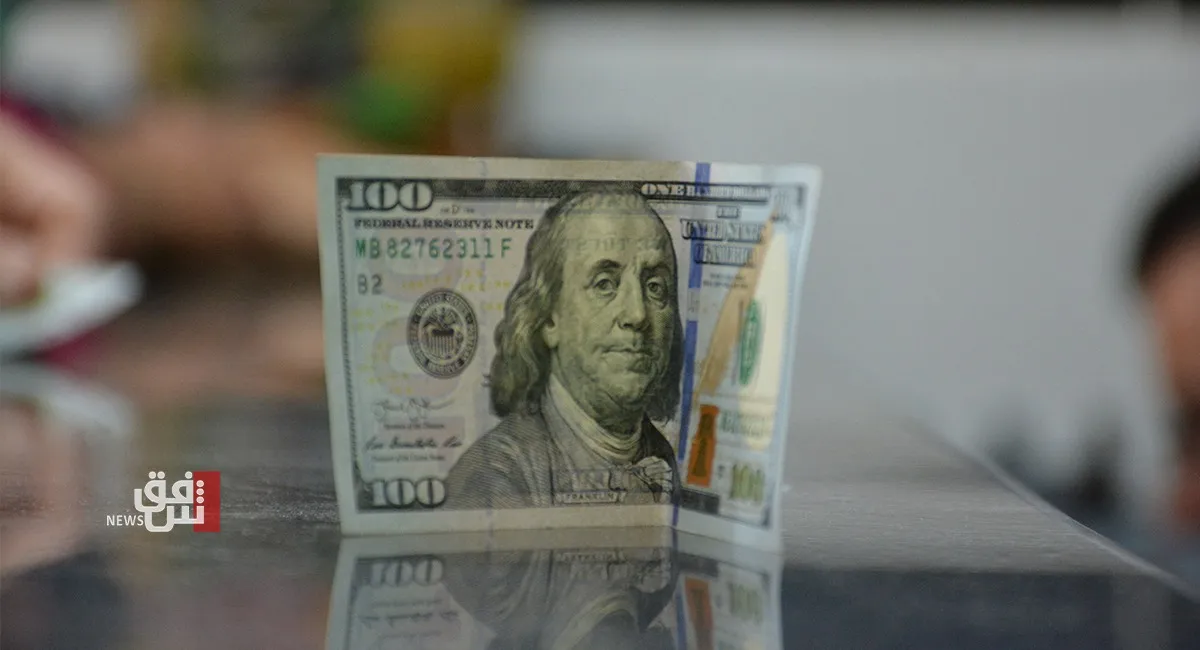 The Central Bank announced on Saturday that its foreign exchange reserves had fallen to more than $2 billion by the end of July.
 Central Bank Governor Ali Al-Alaq said that Iraq’s internal and external debt has reached approximately $150 billion, in response to a parliamentary question directed to him by MP Raed Al-Maliki.
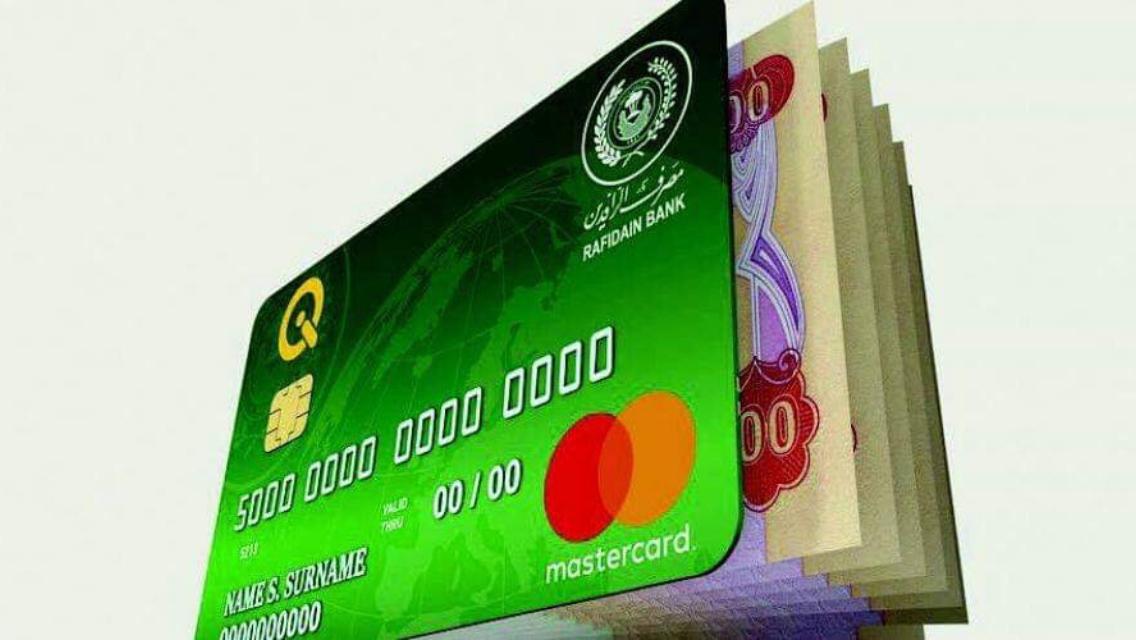 An informed source revealed on Thursday that the government-owned Rafidain Bank has suspended applications for loans and advances allocated to employees, retirees, and members of the Iraqi parliament.
 The International Monetary Fund (IMF) forecast on Thursday that the Iraqi economy will grow by 3.6% in 2026, amid improved economic performance in the region and rising investment and production levels.
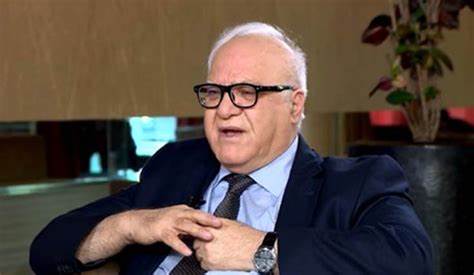 The Prime Minister’s Financial Advisor, Mazhar Mohammed Salih, confirmed on Thursday that Iraq’s commitment to international standards paves the way for the return of dollar transactions, attracting foreign investment, and expanding financial inclusion. He stressed that the path of banking reform is ongoing and irreversible. Salih told the official agency, “Iraq’s commitment to international standards and banking transparency means that the Iraqi financial system has entered a phase of radical reform, which enhances international confidence and qualifies it to be an active player in the global economy.” He pointed out that “the most prominent gains are not limited to the return of dollar transactions to national banks, but also include attracting investment and expanding financial inclusion.”